
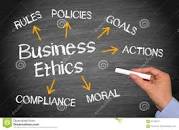
Business ethics is a specialized study of moral right and wrong, as they apply to business institutions, organizations, and behaviours.
Ethics is a branch of philosophy, and it is the right thing to do; it is the action that best serves the ideas of honesty, integrity, morality and good management practices.
Moral values are deep-seated ideas and feelings that manifest as behaviour and conduct.
Business ethics is the application of general ethical rules to business behaviour.
The Characteristics of business ethics
- Business ethics are important and based on social values, the acceptable norms of good or bad and right and wrong practices.
- Based on social customs, traditions, standards and attributes.
- Business ethics predetermine of the ways and means for better and optimum business performance.
- Business ethics provides guidelines and parameters towards the most appropriate perfection in the business scenario.
- It is the study of human behaviour and conducts.
- It is the philosophy to determine the standard and norms to make mutual interactions and behaviour between individuals and groups in an organization.
- Business ethics aims to emphasize more on social responsibility of business towards society.
- It shows better and more perspective ways and means for most excellences in customization.
- It basically inspires the value, standards and norms of professionalism in businesses for customers’ well-being.
The 3 C’s of Business ethics:
- Compliance
- Laws
- Principle of morality
- The Policy of the company
- The contribution ( that businesses can make to the society
- The core values
- Quality of products and services
- Employment
- The usefulness of business activities of to the surrounding environment.
- The consequences of business activity
- Towards the environment inside and outside the organization.
- Social responsibility towards shareholders, bankers, customers and employees of the organization.
- Good public image and sound activity.
Elements of Business Ethics are:
- A formal code of conduct: this is a statement of organizational values.
The code reflects the management’s desire to incorporate the values and policies of the organization.
- Code of Ethics: this summarises the belief and values of the organization.
- Ethics Committee: they prepare or update the code of conduct, and resolve the ethical dilemma in organizations. They evaluate the compliance of the organization with ethical standards.
Ethical communication systems are:
The moral communication system helps the employee get advice if needed and reports all the wrongs done in the organization.
Objectives of ethical communication system:
- To provide information to employees on the company’s policies and procedures regarding ethical code and conduct.
- To help get guidance and resolve queries.
- To communicate the organization’s values and standards of ethical conduct of businesses to employees.
- Set means of enquiries such as hotlines, suggestion boxes and e-mail facilities.
Guidelines and Principles based on ethical conduct:
- Principle of Conscience- based on the person’s inner feelings to analyze the sense of right and wrong.
- Principle of Wishless work- we should be devoted to doing the work of others.
- Principle of Esprit-
- Principle of Publicity.
- Principle of Purity.
- Principle of Humanity.
- Principle of Universal values.
- Principles of Commitment.
- Principles of Rationality.
- Principle of Transparency.
#MMBA3
