
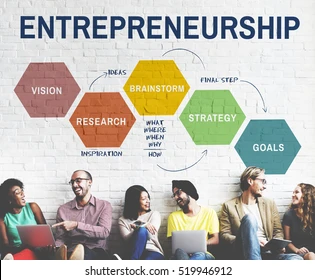
An entrepreneur is an individual who identifies a need in the marketplace and works to fulfill it. Historically, it has been applied to an individual who starts a business, seeing the ability to fulfill that identified need as an economic opportunity. Harvard Business School professor Howard Stevenson, whose research and teaching focused on the field of entrepreneurship, said, “Entrepreneurship is the pursuit of opportunity beyond resources controlled.”
However, entrepreneur, entrepreneurial and entrepreneurship have expanded meanings today. They are sometimes used to describe individuals who can identify unmet needs in a variety of settings, including in existing companies, and seek to find ways to meet those needs. As such, those terms are also applied to a way of thinking and a way of organizing or managing, rather than simply a way to develop a new business.
In the classic sense of the term, an entrepreneur starts a new business venture, building the organization by fulfilling what he or she sees as an unmet market need.
In this regard, an entrepreneur also meets the definition of both a business founder and a small business owner. However, not every business founder or small business owner is an entrepreneur. Businesses that were started to provide existing products or services in ways like others already in the market are not considered entrepreneurial, even if they provide superior products or services.
To meet the definition of entrepreneurship, the business venture requires a new or unique element or process.
Although every entrepreneurial endeavor will follow its path, entrepreneurs share many common traits as they establish their businesses.
They often build their organizations from the ground up, developing business plans that not only articulate the market need they plan to fulfill but also how they intend to produce and deliver their products or services. In this way, entrepreneurs are following recommended standard business practices.
Entrepreneurs are often characterized as visionaries. They are also risk-takers, but successful entrepreneurs are calculated in their risks. They are also adaptable and agile, so they can adjust their objectives as markets and businesses evolve. They have Perseverance, grift, courage, an inner drive, and are resourceful.
In the HBS Online course Entrepreneurship Essentials, the characteristics of successful entrepreneurs are as follows:
1. Curiosity
Successful entrepreneurs have a distinct personality trait that sets them apart from other organizational leaders: a sense of curiosity. An entrepreneur’s ability to remain curious allows them to continuously seek new opportunities. Rather than settling for what they think they know, entrepreneurs ask challenging questions and explore different avenues.
2. Structured Experimentation
Along with curiosity, entrepreneurs require an understanding of structured experimentation. With each new opportunity, an entrepreneur must run tests to determine if it’s worthwhile to pursue.
3. Adaptability
The nature of business is ever-changing. Entrepreneurship is an iterative process, and new challenges and opportunities present themselves at every turn. It is nearly impossible to be prepared for every scenario, but successful business leaders must be adaptable. This is especially true for entrepreneurs who need to evaluate situations and remain flexible to ensure their business keeps moving forward, no matter what unexpected changes occur.
4. Decisiveness
To be successful, an entrepreneur must make difficult decisions and stand by them. As a leader, they are responsible for guiding the trajectory of their business, including every aspect from funding and strategy to resource allocation.
5. Team Building
Great entrepreneurs are aware of their strengths and weaknesses. Rather than letting shortcomings hold them back, they build well-rounded teams that complement their abilities.
6. Risk Tolerance
Entrepreneurship is often associated with risk. While it’s true that launching a venture requires an entrepreneur to take risks, they also need to take steps to minimize them.
7. Comfortable with Failure
In addition to managing risk and making calculated decisions, entrepreneurship requires a certain level of comfort with failure.
The reasons for failure are vast and encompass everything from a flawed business model to a lack of focus or motivation. While many of these risks can be avoided, some are inevitable.
Despite this, successful entrepreneurs must prepare themselves for, and be comfortable with, failure. Rather than let fear hold them back, they allow the possibility of success to propel them forward
8. Persistence
While many successful entrepreneurs are comfortable with the possibility of failing, it does not mean they give up easily. Rather, they see failure as an opportunity to learn and grow.
Throughout the entrepreneurial process, many hypotheses turn out to be wrong, and some ventures fail altogether. Part of what makes an entrepreneur successful is their willingness to learn from mistakes, continue to ask questions and persist until they reach their goal.
9. Innovation
Many ascribe to the idea that innovation goes together with entrepreneurship. This notion is often true. Some of the most successful startups have taken existing products or services and drastically improved them to meet the changing needs of the market.
Innovation is a characteristic some, but not all, entrepreneurs possess. Fortunately, it is a type of strategic mindset that can be cultivated. By developing your strategic thinking skills, you can be well-equipped to spot innovative opportunities and position your venture for success.
10. Long-Term Focus
Finally, most people think of entrepreneurship as the process of starting a business. While the early stages of launching a venture are critical to its success, the process does not end once the business is operational.
According to Entrepreneurship Essentials, “it’s easy to start a business, but hard to grow a sustainable and substantial one. Some of the greatest opportunities in history were discovered well after a venture launched.”
Entrepreneurship is a long-term endeavor, and entrepreneurs must focus on the process from beginning to end to ensure long-term success.
In conclusion, Kelsey Miller, a marketing specialist and contributing writer for Harvard Business School Online, highlights that entrepreneurship is both a challenge and a great opportunity, and it takes certain qualities to be successful. There is no right or wrong way to be an entrepreneur. Characteristics and behaviors like experimentation, persistence, and innovation can be developed with time, experience, and training. What is needed is the entrepreneurial spirit, you will be able to seize opportunities and overcome challenges throughout your journey.
Nichonline.
