
Introduction
Still, on the journey of fallacies, we move to the one I call the “Whatsapp Mother” fallacy. We have all been victims at some point; you find yourself wondering, “what in the world is wrong with these people”
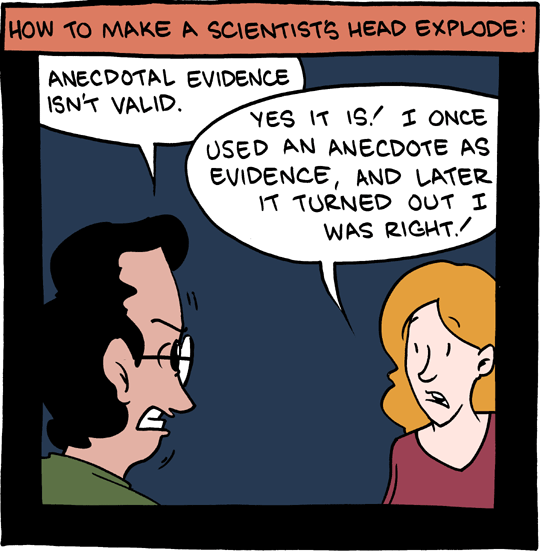
The fallacy is formally known as the anecdotal fallacy. It is a form of logical laziness where a person prefers to hold stories and testimonies as fact, instead of trying to understand complex data.
“While you can always offer data that shows an experience is not the norm, it is nearly impossible to combat this fallacy effectively only with statistics and data.”
GEORGE BRONTÉN
The Whatsapp Mother
This trend annoys me to no end; someone sends you a broadcast (not necessarily your mom) that is just straight-up false. You reply with real data and they choose to believe the random broadcast they received instead of verifiable data right in front of them.
This trend proved to me that trying to change someone’s mind with data doesn’t work every time. They will argue in the most irrational way possible, just to hold onto the initial broadcast as truth.
Why is it Dangerous?
You might think this fallacy is mostly harmless, but it is why many dangerous rumours are started. Personally, I have seen weird things propagated about covid. Some of the weird trends are simply humorous, like standing in the sun to provide immunity; and then we have the dangerous, where people spread rumours about the vaccines not working or just killing people.
The sad thing is what we established earlier how presenting data to people like this doesn’t do anything; no matter the amount or quality of said information. I have tried this multiple times, and I have made better progress arguing with a wall. Not a task I would recommend anyone to undertake.
Examples
Someone saying “Smoking can’t be dangerous; I have an aunt that smokes one pack a day and is still alive and smoking; she is 88 years old”. Showing this person death rates due to smoking and research illustrating the increased risk of lung cancer; does nothing. They have cemented their belief on that one aunt who smokes and is still alive and changing their mind would be a herculean task.
Another example of a statement, “I heard of a self-driving car crash from a friend therefore self-driving cars are too dangerous for use on public roads”. There are many problems with this argument, the way the evidence is collected is not scientific in any way. Secondly, the story could have been a straight-up lie; but this doesn’t phase people who present stories like this as evidence.
Conclusion
Being reasonable is the simple way to avoid this fallacy personally. Keep an open mind, be ready to listen to other people’s points and leave open the option of changing your mind.
Most times the anecdotal fallacy is completely harmless and can be ignored. But once you see it start to venture into dangerous territory, you should try your best to pull them out of the dangerous spiral slowly. They will clamp down and hold on to their fallacy if you present them with too much information too quickly.




 The rush to save our biodiversity