
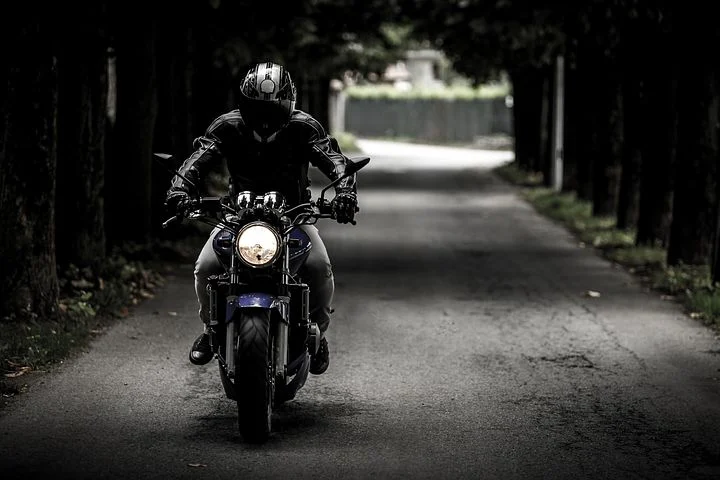
Intrigued by motorcycles, but indecisive as to how to get started? The good news is that learning to ride a motorcycle is easier than most think. Motorcycles are not intricate machines that require you to be adept to get started. They are basically bicycles with engines, and anyone can learn to ride.
In fact, only two prerequisites are necessary to begin learning how to ride a motorcycle. The first being, knowing how to ride a bicycle, while the second is understanding how a manual transmission works. The next phase is, learning how to turn and brake and ride safely. Nonetheless, if you have no prior experience with bicycles, mastering the art of balancing on two wheels does not take long.
In this blog post, we will go over the six easy steps on how to ride a motorcycle. Then, we will cover motorcycle safety basics and help you navigate motorcycle security. Let’s dig right in.
Step 1: Gear Up
Motorcycling comes with a certain amount of risk and it is up to you to minimize it as much as possible. To accomplish that, you will need the appropriate motorcycle gear to keep you protected in the event of a crash. It is important to gear up before you hop on any motorcycle, even on your very first lesson.
Wear a helmet, a pair of gloves and sturdy boots that cover your ankles, motorcycle pants, and a jacket. If you are not sure about the type of riding that you will be doing after you obtain your licence – on road, off-road, adventure, street, enduro – stick with some basics. Kevlar or Dyneema – reinforced motorcycle jeans and jackets, abrasion-resistant textiles, or armoured motorcycle gear will work for starters.
Step 2: Choose Your Motorcycle
As a new rider, the make and model of a motorcycle are irrelevant when making a choice. What you need to pay attention to is the weight and power ratio. You want a bike that is light and easy to handle at first. Then, as you progress, you can level up to the larger, heavier and more powerful motorcycles. For now, a motorcycle in the range of 250-650cc should suffice.
Some other factors to consider when picking a motorcycle are, seat height, riding body position, and motorcycle balance. Typically, street, dirt, and adventure (ADV) bikes will have the most comfortable, upright sitting position. Sports bikes will require you to lean forward.
Swing a leg over the saddle to see if you can comfortably flat-foot the bike. Check if the motorcycle feels balanced. Try getting off and dropping the stand. Rock the bike back and forth. Finally, wheel it around a little, you should be able to easily handle the bike both in and off the saddle.
Step 3: Practise Braking
Now that you are aboard your motorcycle, you would want to get it moving. However, before you do so, you must learn how to brake. The pedal on your right side is the rear brake, and the lever on your right handlebar is your front brake. To slow down or stop altogether, use both brakes evenly and always ensure you are stepping on the rear brake and pulling in the front brake lever gently and gradually: never grab or stomp on your brakes, because the wheels may lock up sending you off balance.
Gently tap the rear brake pedal and pull in the front brake lever slowly to master braking in a controlled, smooth movement rather than jerking the bike to a halt. Practise your braking while the bike is standing still: roll forward a little, then tap the rear brake to get a feel for it. Repeat this with your front brake and try to find that sweet spot where the brakes engage but to not grab the wheel discs too suddenly.
Step 4: Use the Clutch and Throttle
Now that you feel confident about braking, it is time to start your bike and learn the controls. What frightens most new riders is shifting gears, but I assure you that it is easier than you may have imagined. Motorcycles often come with five gears; the first gear is down, then you shift up for neutral, second, third, fourth, and fifth.
To engage the gears, you will need to pull the clutch lever in. To start moving, engage the first gear, while holding the clutch lever in, then gently roll the throttle while releasing the clutch simultaneously (just like with a car!). Once the bike starts moving, gently let the clutch out while adding a little bit of throttle. Once you reach higher RPM’s, pull the clutch lever in fully, lay off the throttle, and engage second gear. To slow down, shift down until you are in first gear, then pull in neutral once you have come to a stop. Repeat until it becomes second nature!
Step 5: Practise Turning
Riding a motorcycle in a straight line is one thing, taking corners, U-turns, and twists is another.
To keep the bike steady and stable in corners, do not rely on turning your handlebars only. As you negotiate a bend, the bike will lean into it a little, and you need to lean with it. Do not fight your bike, rather go with the movement. Remember to keep your throttle steady and always look through to where you are going. If you stare at your front tyre, chances are, you will stall or crash. Looking through the corner helps you stay balanced and steer the bike in the direction you want to go.
