
Every leader, heads of department, units or an outfit is a manager. Every manager needs the financial statement to enhance his or financial decision. As a manager, the understanding of the basics of a financial statement is crucial and cannot be over-emphasized.
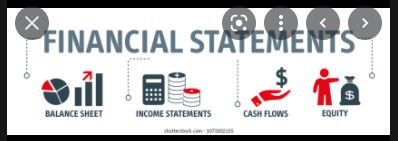
A financial statement is a document or report that shows the financial performance and position of a company. There are 4 major types of financial statements. Namely:
- The Income statements
- The statement of financial position
- The Statement of cashflow
- The statement of changes in equity.
The details of these statements are stated below:
- The Income Statement: This statement shows the financial performance of an organization. It details the revenue, cost of sales, administrative expenses and profits of the organization. It reveals the core operation of a business activities ranging from out the materials were sourced for a manufacturing company for example to the point of processing into semi-finished goods or finished goods before being sold out. This statement reveals whether the company has made any profit or loss within a period of time.
- The Statement of Financial Position: This statement shows the financial position of a company. It details the assets, liabilities and equity of a company. The assets of a company comprise non-current and current assets. The assets could be further classified into Income generating assets (IGA) and non-income generating assets (NIGA). We can also classify the liabilities of a company into current and non-current liabilities. The current liabilities are those liabilities that are due for payment within a year, while the long-term liabilities (non-current liabilities) are those liabilities which will be due for payment after 1 year. Finally, the equity is also divided into owners’ equity and earned equity. This combination of owners’ equity and earned equity is called the shareholders’ fund. Every investor or management of a company will need this statement to ascertain if a company is geared, liquid or over capitalized.
- The Statement of Cashflow: This statement shows the way cash is utilized in the company. It consists of 3 elements, which are: Cashflow from operations, cashflow from financing and cashflow from investing.
- Operating cashflow: this segment of cashflow statement is concerned with the operation of the business. It involves all the cash involved in operation and also adjustments for non-cash items which the income statement had recognized in the process of generating the profit of the company.
- Investing Cashflow: This segment of the cashflow statement is concerned with acquisition and disposal of non-current assets.
- Financing Cashflows: This segment is concerned with financial activities that gave rise to financing such as issue of shares, issue of loan notes, dividend payments etc.
- The Statement of Changes in Equity: This statement shows the movement of Equity of the company. This includes the share capital, retained earnings and revaluations surplus.
Users of Financial Statements:
The above financial statements are useful to the following users for decision making:
- The Management
- The Investors
- The Government
- The Public
- The regulators of financial statements.
- Tax Authority
Thank you.
#EMBA27
