
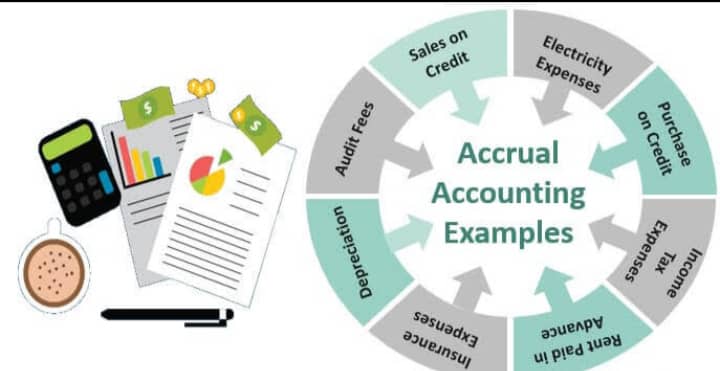
So, you know that feeling that you have money in your account because your records as a business owner says so and then, when you need money to execute a project, you are unable to find your alleged monies. Come let me tell you what has been happening there-simply put, your guys in the accounts department are very familiar with the accrual concept and they are using it efficiently.
What is an accrual concept? The accrual principle is an accounting concept that requires transactions to be recorded in the time period in which they occur, regardless of when the actual cash flows for the transaction are received. The idea behind the accrual principle is that financial events are properly recognized by matching revenues against expenses when transactions – such as a sale – occur, rather than when the actual payment for the transaction may be received. Large businesses consider the accrual principle the most valid accounting system for determining the financial position and cash flows of their business operations, with revenues and related expenses recorded within the same reporting period. Businesses earning over $4 million in revenues are required to use the accrual principle for tax purposes.
Why do businesses need accrual method? The accrual method of accounting came into use as a response to the increased complexity of business transactions. Large companies that sell goods on credit may continue to receive revenue over a long period of time from goods that were sold earlier. Recording such transactions when the payments occur would reflect an inaccurate picture of the company’s financial position, whereas the financial markets require timely and accurate reporting of a company’s finances. With the accrual accounting method, large businesses can present the most accurate picture of the financial position of the company.
In accounting, confusion sometimes arises when working between accounts payable vs accounts receivable. The two types of accounts are very similar in the way they are recorded, but it is important to differentiate between accounts payable vs accounts receivable because one of them is an asset account and the other is a liability account. Mixing the two up can result in a lack of balance in your accounting equation, which carries over into your basic financial statements. Owing to the accrual concept, these accounts are recorded as accounts payable or accounts receivable.
What are accounts payable? Accounts payable is a current liability account that keeps track of money that you owe to any third party. The third parties can be banks, companies, or even someone who you borrowed money from. One common example of accounts payable are purchases made for goods or services from other companies. Depending on the terms for repayment, the amounts are typically due immediately or within a short period of time.
What are accounts receivable? Accounts receivable is a current asset account that keeps track of money that third parties owe to you. Again, these third parties can be banks, companies, or even people who borrowed money from you. One common example is the amount owed to you for goods sold or services your company provides to generate revenue. #MMBA5

 “Python Prowess: A Lighthearted Adventure into Learning the Snake’s Code”