
Introduction
In the realm of decision-making, concepts like uncertainty, probability, and risk play pivotal roles. This article aims to demystify these terms, exploring their definitions, types, and the nuanced differences between them. As a manager or a data analytics student, understanding these terms will help you streamline how you use them to communicate and make better business decisions.
What is Uncertainty?
Uncertainty, at its core, signifies a lack of predictability or knowledge about future events. It’s the foggy terrain where outcomes are not precisely known. In various decision-making scenarios, uncertainty can be a formidable force, influencing choices and strategies.
Types of Uncertainty
- Aleatoric Uncertainty: This stems from inherent randomness in events, like the roll of a dice. It’s unpredictable but has a probability distribution.
- Epistemic Uncertainty: Arises from lack of knowledge. It is uncertainty that could be resolved with more information, like predicting the outcome of an election.
- Knightian Uncertainty: Named after economist Frank Knight, this is uncertainty so profound that probabilities cannot be assigned. An example is navigating uncharted waters where past data is inadequate. An example is “what could happen with the invention of Artificial General Intelligence”.
What is Probability?
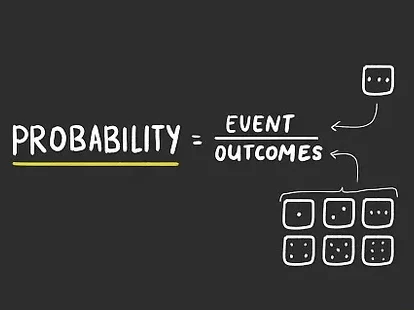
Probability is a mathematical concept representing the likelihood of an event occurring. It provides a quantifiable measure of uncertainty. For instance, the probability of flipping a fair coin and getting heads is 0.5.
Some Nuances to Note in Probability:
An experiment is any process that generates well-defined outcomes.
The sample space for an experiment is the set of all experimental outcomes.
Each of the items in the sample space is called a sample point.
Some Requirements of Probability
- 0 ≤ P(E) ≤ 1. The probability of an event occurring ranges from 0 to 1. Zero means that the event cannot happen, while one means that the event has every likelihood to occur.
- The sum of the probabilities for all experimental outcomes must equal 1
What is Risk?
Risk is the measure of the probability of uncertainty occurring. It involves not only the probability of an adverse event but also the magnitude of its consequences. In a financial context, risk is the possibility of losing money on an investment.
Difference Between Probability, Uncertainty, and Risk
Uncertainty vs. Probability: Uncertainty is the broader concept, representing a lack of surety. Probability, on the other hand, introduces a quantitative aspect, assigning a measure to the likelihood of outcomes. Uncertainty refers to situations where the outcome is unknown or unpredictable, while probability assigns a numerical value to the likelihood of different outcomes.
Probability vs. Risk: Probability is a tool to navigate uncertainty, providing a way to quantify chances. Risk, however, goes further by considering the consequences associated with those chances.
Conclusion
In the complex landscape of decision-making, understanding uncertainty, probability, and risk is crucial. Recognising the types of uncertainty, employing probability for quantification, and factoring in the potential consequences define a comprehensive approach to managing the intricacies of an uncertain future. In data analytics understanding probability is crucial in using the data to make better-informed business decisions and driving better business outcomes.

 A POSITIVE MIND