
Python is a versatile and beginner-friendly programming language that is widely used for web development, data analysis, artificial intelligence, and more. If you’re just starting with Python, here are the fundamental concepts you should understand:
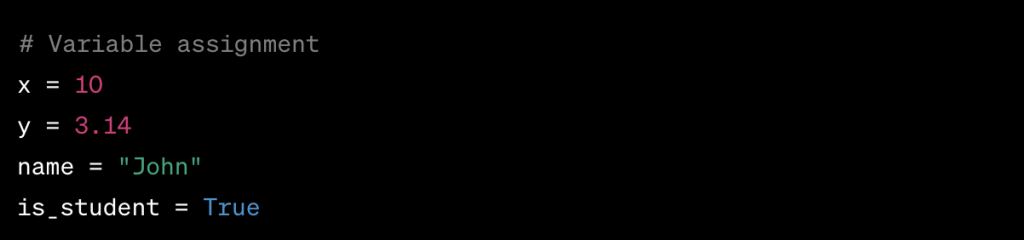
1. Variables and Data Types:
In Python, you can store values in variables. Variables are created by assigning a value to a name. Python supports various data types, including integers, floats, strings, and booleans.
pythonCopy code
2. Print Statement:
The print() function is used to display output. You can print variables and combine them with strings using the format method.

3. Input from Users:
You can take input from users using the input() function.

4. Basic Operators:
Python supports standard arithmetic operators (+, -, *, /) and others like % for modulus and ** for exponentiation.

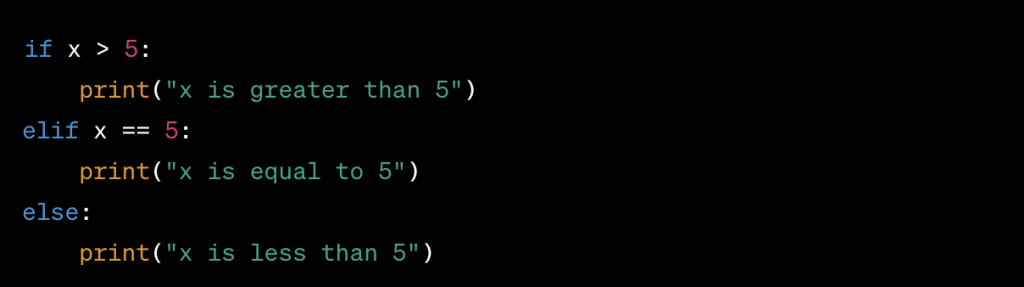
5. Conditional Statements:
Conditional statements allow you to make decisions in your code using if, elif, and else.
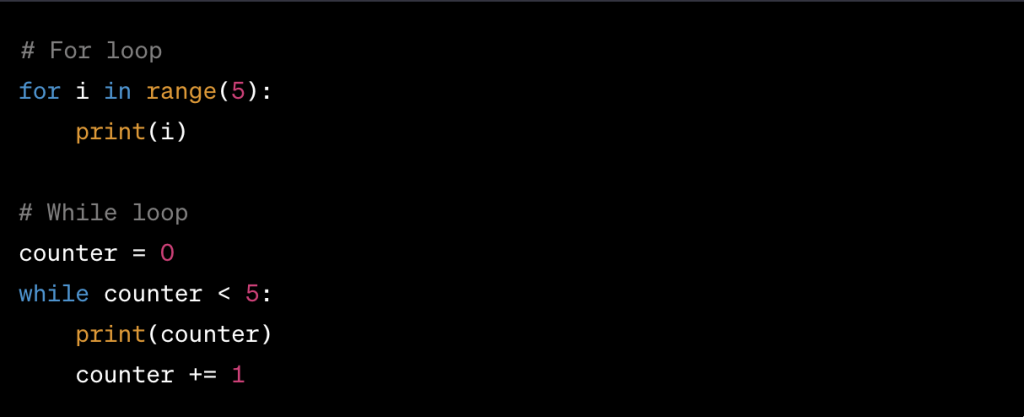
6. Loops:
Loops are used for repetitive tasks. The for loop iterates over a sequence, and the while loop repeats a block of code while a condition is true.
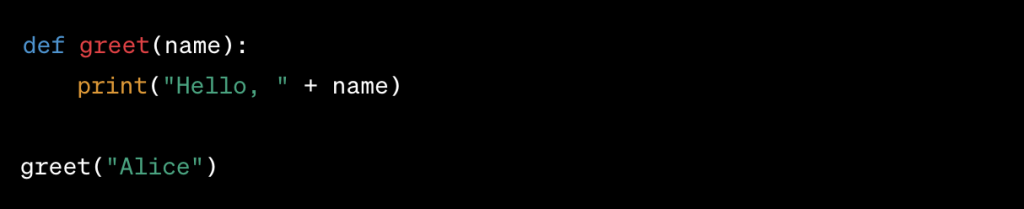
7. Functions:
Functions are blocks of reusable code. You define a function using the def keyword.
8. Lists:
A list is an ordered collection of items. It can contain elements of different data types.

9. Dictionaries:
Dictionaries store data in key-value pairs.

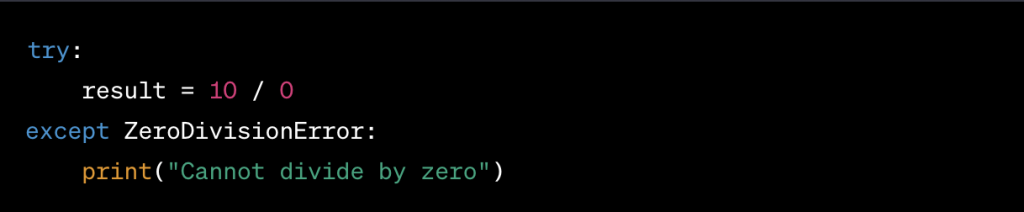
10. Exception Handling:
Handling exceptions helps your program deal with errors gracefully.
These basics provide a solid foundation for learning Python. As you progress, you can explore more advanced topics like object-oriented programming, modules, and external libraries. Practice is key, so try solving coding challenges and building small projects to reinforce your understanding.

 Applying the DEAL, CLIP to the Double Entry Accounting System