
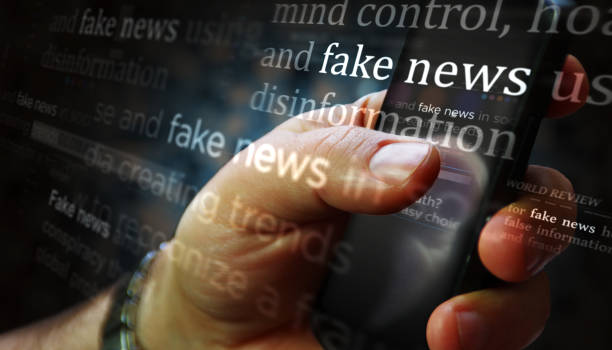
What is fake news? As a concept, fake news is a tad difficult to define. The term became a well-discussed topic after the 2016 U.S. Presidential Campaign and owes its new-found popularity to former President, Trump. The Collins Dictionary announced “fake news” as a word of 2017, and defined it as “false, often sensational information disseminated under the guise of news reporting” (Collins Dictionary, 2023). In simple terms, fake news is information that is verifiably false and mostly orchestrated to mislead others.
While this concept may have been made popular in the USA, social media has created a monster out of it and served as the perfect platform for the spread of fake news globally. Content that is sensational or controversial tends to get more clicks, likes, and shares. This incentivizes the creation of clickbait and sensationalized stories, which are often misleading and outright false. This fake news becomes widespread and, in most cases, mimics the features of real news; it is well-written and presents with evidence, albeit false. For instance, a little fire incident in a small wing of government property can be turned into; “State House gets gutted to the ground”. In a few minutes, social media blogs pick it up and videos of an old government building that got burnt 10 years ago accompany the heading. Now, everyone believes this because of the seeming presence of video evidence. This misinformation would have spread across various social media platforms long before fact-checkers or government agencies could prepare to dispel the misinformation.
This practice is increasingly being used by political opponents and supporters. It is used to perpetrate attacks on legitimate media and weaken public trust. The speed with which this misinformation spreads on social media and the literacy level of some social media users has made it increasingly difficult for some members of the public to detect fake news. In addition, since algorithms on social media platforms are designed to show users content that aligns with their interests and preferences, this can create filter bubbles and echo chambers, where users are exposed to information that reinforces their existing beliefs. This makes it easier for fake news to spread within specific communities since people are more likely to believe and share information that aligns with their beliefs and the fake news provides confirmation bias to their existing notions.
Addressing and curbing fake news on social media has to be a collective effort of users, regulators, fact-checking organisations, and technology companies. The attempt by regulatory bodies to discourage the spread of fake news on social media platforms is often thwarted by anonymous generators who create fake accounts to spread misinformation. This anonymity makes it challenging to hold responsible parties accountable for the spread of fake news. Social media platforms can refine their algorithms to curb the spread of fake news and to promote credible sources of information. They may also add warning labels to content that has been flagged as potentially false or misleading.
As social media users and the most susceptible group to fake news, we could take it upon ourselves to educate the less literate members of our communities on media literacy, and how to identify and verify reliable sources of information. This can help mitigate the spread and impact of fake news.

 How to Accelerate Your Learning by Teaching Others #MMBA5