
Psychology is the scientific study of the mind and behaviour. It’s an exciting area of study. I have gained much knowledge from psychology, mostly positive psychology, and here is what I have learned about this subject.
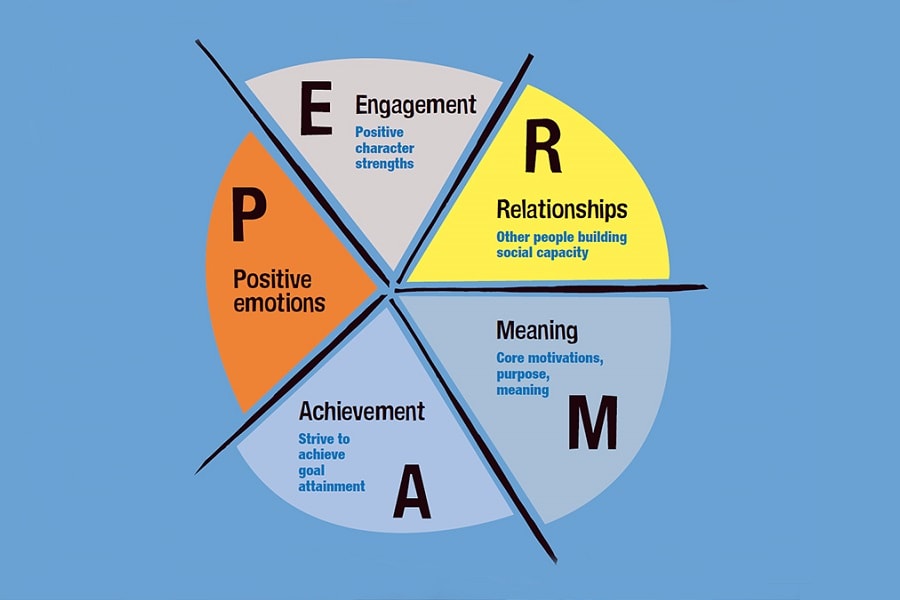
Positive psychology is the science of positive emotions, positive character traits and positive institutions. It is the scientific study of what makes life deserving. Positive psychology was officially begun in 2000 by Dr Martin Seligman. An essential aspect of positive psychology is flourishing. Flourishing is finding fulfilment in our lives, accomplishing meaningful and worthwhile tasks, and connecting with others at a deeper level—essentially, living the good life. It transits past the confines of mere happiness or well-being; it embraces a broad scope of positive psychological constructs and provides a more comprehensive view of the meaning of happiness and well-being. Dr Martin Seligman, the founder of flourishing, defines it as paying particular care to raise and sustain these five perspectives of the PERMA model as the model aids the objective of flourishing: Positive Emotion, Engagement, Relationships, Meaning, and Accomplishment (hence PERMA).
Positive psychology has three pillars. First, positive experiences. It understands positive emotions that need contentment with the past, present happiness, and future hope.
Secondly, positive individual traits. It understands the strengths of love and work, resilience, courage, self-control and wisdom, to mention a few.
Lastly, positive institutions. This involves the study of strength that encourages better communities, justice, responsibility, work ethics, teamwork and purpose.
People have criticized positive psychology. Seligman’s authentic happiness theory was criticized for not realizing that people have more important concerns about life than seeking individual happiness. Also, the PERMA model was criticized for assuming personal happiness could be attained solely. Similarly, positive psychology’s primary focus was questioned on positive emotions and the potential disadvantage of too much happiness. Though positive psychology has been criticized, its benefits cannot be denied.
The application of positive psychology targets distinct purposes around well-being and addresses different life circumstances that initiate the purpose of well-being interventions. Positive psychology has changed and influenced our way of life. It significantly improved health, work, education, and almost all other sectors imaginable. Health and well-being are enhanced by cultivating psychosocial resources of positive emotions, forgiveness, optimism, life satisfaction and social support. Observational research reveals that optimism improves good health and long life. For example, according to a study among asymptomatic men with HIV, optimism delayed the incipience of AIDS over an 18-month follow-up. Over an 8-year observation, optimism predicted healthier pulmonary function amongst older men with controlled smoking.
Similarly, optimism predicted less pain and better health in a controlled long-term study of aged men and women. Positive psychology applied in education enhances learning. Seligman also believes positive psychology is helpful in education because of its reliable tools for increasing well-being. Contemporary research reinforced that providing early emotional support during the school year leads to enhanced instructional success in the school year.
In conclusion, the advantage of positive psychology is a simple acknowledgement of the number of people who have developed higher needs levels. Now, self-realization and fulfilment in any area of life are available to a broader populace. The goal of positive psychology is to improve the well-being of every person, regardless of their age and health. These nuggets will motivate and inspire the determination to live a life of optimal well-being. Until my next post, keep flourishing.

 Navigating Chaos: Entrepreneurship, a 9 to 5, and an MBA Program