

According to research by the Harvard Business Review (January 2021), achieving a better balance between professional and personal priorities boils down to a combination of reflexivity – or questioning assumptions to increase self-awareness – and intentional role redefinition. More importantly, their research showed that achieving this was not a one-time fix, but rather, a cycle that we must continuously engage in as our circumstances and priorities evolve. To fully grasp this cycle, we must define what constitutes balance rather than wait for our employers to do it for us. To ensure we make the best use of our time at work and home, we must ensure that we can bend work into our own individual set of priorities.
A balanced life encourages the integration of the personal and professional in a healthy way, supporting an identity that includes the career but does not revolve around it. It is simply the pursuit of equilibrium and harmony between both worlds. Achieving this balance is crucial for our mental and physical health since prolonged work hours can lead to stress, burnout, and poor productivity. Contrary to the belief that working longer hours leads to increased productivity, experience, and research has shown that prolonged work can lead to diminishing returns and a drop in morale. Finding the harmonious balance between work and personal life can refresh us, and improve our focus, creativity, and quality of output.
Sacrificing personal relationships in pursuit of professional success can exert connections with loved ones. Applying a consciousness to striking a balance ensures quality time is spent with friends and family, fostering strong relationships and building a support system that can be invaluable during challenging times. Work-life balance is not limited to reduced work hours but also extends to personal development. Carving out time for hobbies, education, social gatherings, meditation, and self-reflection contributes to personal growth and ultimately benefits our professional life by building perspective.
The global pandemic of 2020 forced employers and employees to devise deliberate strategies to achieve a balance. As individuals, we were forced to pause and take a mental stock of our lives, stress triggers, and priorities. Now, we are more in touch with our inner compass which helps us find the balance best suited for our lives. We can leverage productivity tools to help us embrace the way our brain works; whether in short bursts or fast-paced. To prevent work from spilling into personal time, it is pertinent to designate blocks of time for each task. This way, we anchor tasks around our most productive hours.
The pandemic also brought with it the adoption of remote work for employees. While this sounds less demanding, we have found that working from home often leads to the 9 to 5 clock becoming blurred. We are unable to log off when working from home. Studies have shown that setting a time to end work for the day and reinforcing it by actually powering down work devices, stepping out of the home office, and immediately engaging in regular personal activities ensures that we strike a balance when working remotely.
In conclusion, achieving work-life balance largely depends on us. Our ability to say “No” where necessary, maintain open and transparent communication with our employers and colleagues, and be deliberate about our self-care practices can help us navigate the complexities of the modern-day professional world. Ultimately, an intentional and conscious approach to work-life balance contributes not only to individual happiness and success but also to a healthier and more vibrant society as a whole.




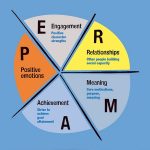 Positive Psychology