
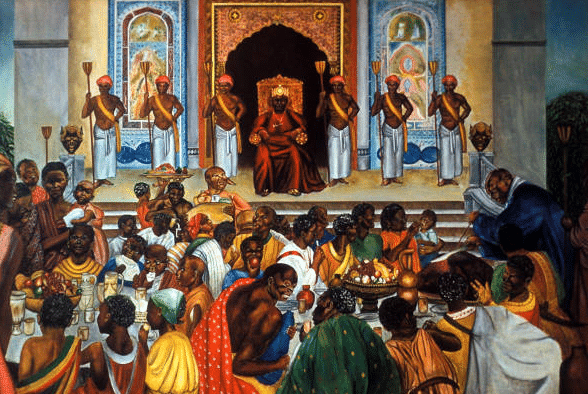
Africa has a very rich history, let us talk about how the captivating journey unfolds—a journey that traces the transformation of traditional monarchies into vibrant democracies. It’s a story that resonates like a melody, echoing the rhythms of resilience, adaptation, and the pursuit of a brighter future across the continent.
Imagine standing on the banks of the Nile, where the ancient Kingdom of Kush once thrived. In this kingdom, rulers held immense power, steering the course of history. Fast forward to modern times, and we witness a metamorphosis—the birth of Sudan as a sovereign nation, embracing democratic ideals. The echoes of the ancient monarchy linger in the landscape, a testament to the evolving nature of governance in Africa.
Lesotho, nestled in the embrace of Southern Africa, presents another intriguing chapter in this narrative. It was once a realm ruled by monarchs, mirroring the traditional governance structures prevalent across the continent. However, as time unfurled its wings, the people of Lesotho felt a yearning for a more inclusive governance system. This desire led to a transformation, and today, Lesotho stands as a constitutional monarchy with a parliamentary system—a testament to the nation’s commitment to the principles of democracy.
As we explore the dance from monarchies to democracies, Ghana takes center stage. In the pages of history, Ghana’s journey unfolds as a remarkable tale of resilience and adaptability. From the era of British colonialism to the triumphant beats of independence, Ghana faced the complexities of governance. The nation’s transition from a one-party system to a multi-party democracy is a reflection of its commitment to political pluralism and inclusive governance.
These historical examples showcase that the evolution from monarchies to democracies is not a linear journey but a nuanced dance, where the steps are influenced by the unique histories and aspirations of each nation. The rhythm of change resonates differently in the diverse landscapes of Africa.
Picture the Kingdom of Mali, once a powerful empire in West Africa. Ruled by great leaders like Mansa Musa, Mali’s history echoes with tales of wealth and influence. Fast forward to the present day, and Mali grapples with the complexities of governance. The journey from an ancient monarchy to a modern democratic nation involves navigating challenges unique to its context. It’s a dance where the footsteps are guided by the echoes of a rich past, merging tradition with the contemporary needs of a diverse population.
In the intricate choreography of this transformation, the desire for equality and representation emerges as a common thread. The traditional monarchies often concentrated power within the royal elite, leaving the majority of the population marginalized. The yearning for a more equitable system became a driving force, pushing nations towards embracing democratic ideals.
This metamorphosis, however, is not without its challenges. Picture it as a landscape where shadows linger even as sunlight filters through the trees. Corruption, political instability, and socio-economic disparities cast their shadows on the path forward. Yet, the commitment to democratic values remains unwavering, a beacon guiding nations through the complexities of change.
The dance continues, and the world watches with anticipation. It’s a dance where the journey is as significant as the destination. Africa’s commitment to democracy is not merely a political shift but a celebration of the human spirit—a spirit that refuses to be confined by the constraints of the past.
In conclusion, the evolution from African monarchies to democracies is a harmonious symphony, played on instruments crafted from the experiences and aspirations of the people. As we witness this dance, let us acknowledge the diverse steps, the unique rhythms, and the resilience that defines each nation’s journey. The melody of democracy, once thought to be foreign, has found its resonance in the hearts of African nations—a melody that continues to evolve, echoing across the plains, mountains, and deserts, shaping the future of an extraordinary continent.

 THE SKILL CALLED PROBLEM SOLVING