
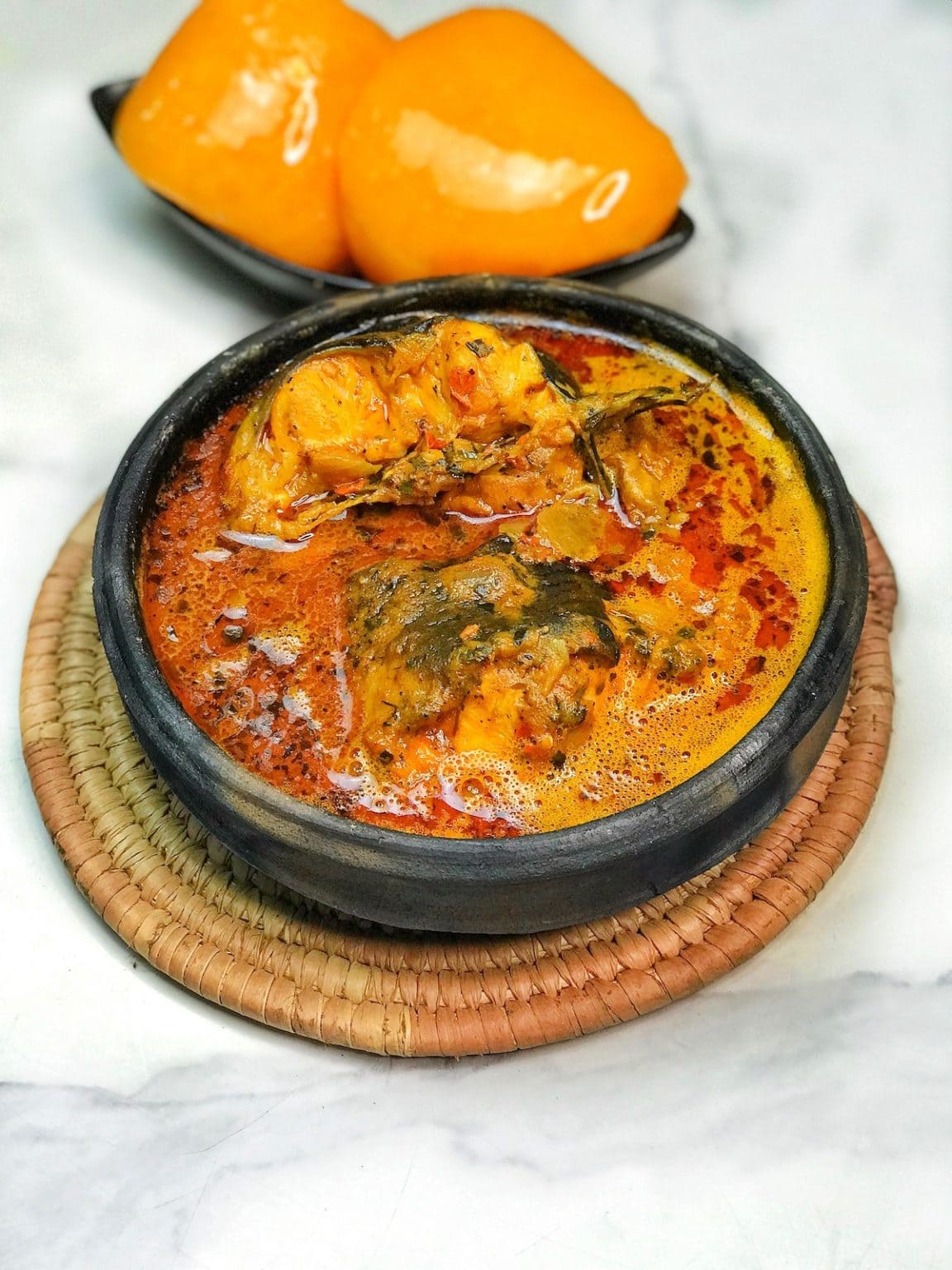
Arguably the best tasting soup in the world, this mouth watery blend of palm nut and special African spices holds a very special place in mine, as well as the heart of everyone who ever tasted the soup. A funny man once said “if you want to poison me, use banga soup”, it was funnier the way he said it in pidgin (which I will like to propose should be a formal language, but I digress).
Yes, Banga soup, sauce, stew whatever you want to call her, I mean it; originated from the Niger-delta areas of Nigeria (Urhobos and Itsekiri). It migrated to other regions in Nigeria, going by different aliases, Ofe Akwu in the east, Abak Atama in Calabar and Akwa-ibom; it is usually consumed with Eba, Akpu (fufu), Semolina, or Starch, although other cultures eat banga soup with rice and beans.
Ingredients for the original Banga soup (I mean my recipe):
Fresh palm fruits (Banga); Tiko (Dried meat); Ground crayfish; Cayene pepper; Ataiko; Irugege; Oburunbebe (Licorice sticks); Beletientien (bush apple leaves) or dried scent leaf (Basil) or dried bitterleaf; salt to taste
Other cultures use ingredients like Aidan fruit (Efik Style) and uziza seeds (Igbo Style)
You will notice that I did not put any measurements to the ingredients listed above, this is because I rely heavily on my ancestors when cooking. There have been some unfortunate turnouts but generally they guide me well.
Procedure
The journey begins deep in the forest (or your back yard), who am I kidding its 2023 the journey might as well begin on the grocery aisle of a supermarket where you purchase your already made banga concentrate; but if you are going the old fashion way, boil your fresh palm kernel fruit till the skin is soft, usually about 30 to 45 mins, then pound lightly in a mortar to extract the oil, pour in some hot water and strain out the juice, add the obunrubebe stick and tiko, then boil till it thickens and the oil rises to the top.
Next you add your blended mix of crayfish, pepper, and those funny named spices (Irugege, Ataiko), then stir. Few minutes later your neighbor would begin to make conspicuous noises to let you know that he is around… but you must have locked your door. Cook for a little while longer on medium heat, then add your beletientien leaves
If you managed to follow these instructions and your soup turned out beautifully, i.e., your neighbor came through the back door to ask you if you need starch – congratulations. If your soup turned out to be too watery, don’t be scared, there is still hope, keep your pot open (use a splatter guard… like wooden spoon across the pot) and keep cooking, it will thicken. Or you can take the easy road out and add little yellow garri. If it turns out that there is too much palm oil floating on top your soup, scoop and discard some of it (you bought good palm nuts)
The prestige of this soup can be elevated when it is served in native clay pots, if I concentrate hard enough, I can hear those rhythmic bubbles, and the song that banga soup sings in a clay pot.
Jefe




 LOOKING BEYOND THE CASE