

An all too familiar course for me, being a Chartered Accountant for more than a decade, is Corporate Financial Accounting. So, I smiled going through the courses assigned for the semester, knowing this is would be a sure “A” in my results. Surprisingly, listening to Professor Akintola Owolabi, one of the most respected Faculty at the LBS, gave a deeper appreciation of the interrelationship between recognizing the phases or stages of a business in the financial cycle and understanding language of the corporate financial report. The euphoria of listening to industry experts who are practically bridging the gap between theory and practical application fueled my desire to pay attention.
I can categorically say most of the cohorts in the MEMBA 12 experienced financial accounting made easy at first hand at the Brush-up session organized by the LBS . It was a beautiful way to explain the concept of Accounting and Book-keeping to the layman and piquing one’s interest in search for more, specifically in understanding and speaking to the financial report of any company. The comprehensive and detailed curriculum coupled with the interactive learning environment encouraged participation in discussions and projects that signaled a critical thinking and analysis approach towards any situation.
A lot of concepts and theories were put forth by Prof. (as he is popularly called), the business cycle as it pertains to financing and investing activities struck a chord with me. The phrase, “the world is a global village” cannot be overemphasized especially with how resources and capital are allocated efficiently and also how the “current world of credit – pay later” plays a vital role in shaping business and financial opportunities. This is depicted in the flow below;
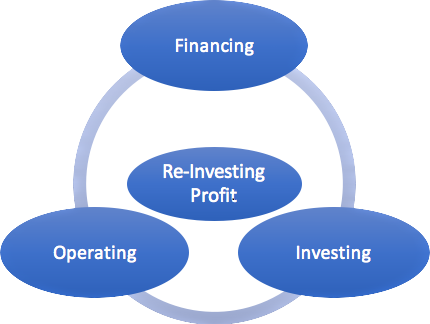
Understanding the interplay between the dynamics of assessing or giving credit and how businesses navigate these stages provides an adaptive approach to understanding the numbers presented in the financial report and or the reasons for strategic decisions upheld by management in any financial year. Accountants play a vital role in providing a true and fair view of a company’s performance at these identified stages a business could go through and which would form the bane of financial reporting, as indicated below;
- Financial Planning and Capital Acquisition: Strategize and plan on the source of funding, either to raise capital by self or through the providers of capital; loans, debt, equity buy-ins
- Investment – Allocating funds towards long term resources and identifying prudent investment strategies including market analysis, risk assessment and portfolio diversification
- Operational Management – Highlighting effective operational management, cost control and ensuring profitability by enhancing productivity
- Reinvestment and Growth – Rewarding the providers of capital as well as reinvesting part of the profit back into the business to ensure growth, expansion, long-term sustainability and financial stability.
Corporate Financial Accounting is a discipline that follows set accounting principles, concepts and standards to ensure accuracy , transparency in financial reporting, which is crucial for decision making and providing all stakeholders with necessary information and maintaining trust and integrity in the economy. My experience and interactions with the various Faculties on this particular course, has helped with providing valuable insights into a comprehensive understanding of a company’s financial position and ultimately aiding stakeholders in making informed decisions.
#MEMBA12
