
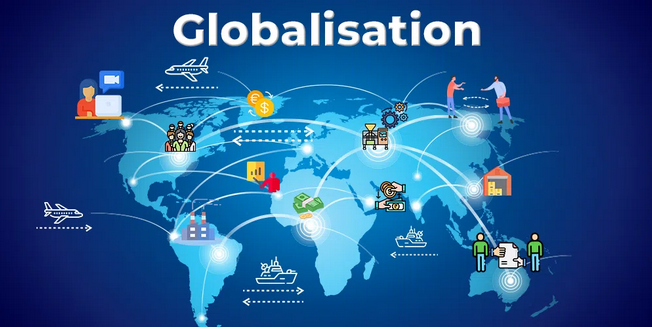
Globalisation is the interaction and integration among people, companies, and governments worldwide. Its origin can be traced back to the early 19th century due to advancements in transportation and communication technology. According to the International Monetary Fund (IMF), there are four basic aspects of globalisation: trade, capital investment, migration, and knowledge transfer.
In 1986, during Ibrahim Babangida’s military regime, Nigeria was battling economic recession. It accepted the Structural Adjustment Program (SAP) as one of the conditions to support Nigeria with monetary aid from the World Bank and IMF. The SAP allowed free trade, devaluation of Naira (against the dollar), and discontinued protectionism at the time Nigerians pursued import substitution as an economic development strategy to grow small and medium enterprises. Unfortunately, the devaluation of the Naira caused the cost of imported raw materials to grow astronomically and forced many manufacturers unable to compete in price with imported goods. Consequently, many manufacturing companies in the late ’80s, like textile companies, automobile assembly plants, etc., were forced to shut down because they expended more on imported raw materials due to the free fall of the Naira that increased their cost of production.
In 2002, the government of Olusegun Obasanjo implemented the local content policy/backward integration policy for cement manufacturing companies to roll back some of the side effects of globalisation (dumping). Import licenses for cement were granted only to companies with local manufacturing plants, in addition to VAT and customs duty waivers as incentives for importing cement production equipment/plants. This policy geometrically increased the country’s local cement production capacity from 2 metric tonnes in 2002 to 58.9 metric tonnes in 2023 with players like Dangote Cement, BUA Cement, Lafarge Cement, etc., and foreign investment worth over 2 Billion Dollars.
In 2013, the administration of President Goodluck Jonathan launched the National Automotive Industry Development Plan (NAIDP) with the primary objective of restoring automobile assembly plants and developing local content. The import tariffs and duties on imported new and used vehicles were increased to 70 per cent while reducing tariffs on semi-knocked down and completely knocked down vehicles and assembly machinery to a range of 0 to 10 per cent. However, the National Automotive Policy has been struggling since 2013 due to frequent changes in the government’s implementation strategy and the increased patronage of the Nigerian government (the highest buyer of automotive vehicles) for imported cars instead of locally assembled vehicles.
To reduce the country’s negative trade balance and strengthen the Naira, the Nigerian government should extend the local content policy to all imported goods like mobile phones, electronic appliances, textiles, etc., for job creation. We may not manufacture mobile phones and other electronic appliance components locally. Still, we should be able to assemble them by importing only the semi-knocked-down parts. Every imported good to Nigeria takes away jobs and the strength of our Naira. The government should incentivize the buyers with zero value-added tax to encourage local patronage of our locally produced goods (especially in the automobile industry).
Olayiwola S Opoola (MEMBA12)

 LBS Journey- A reflection