
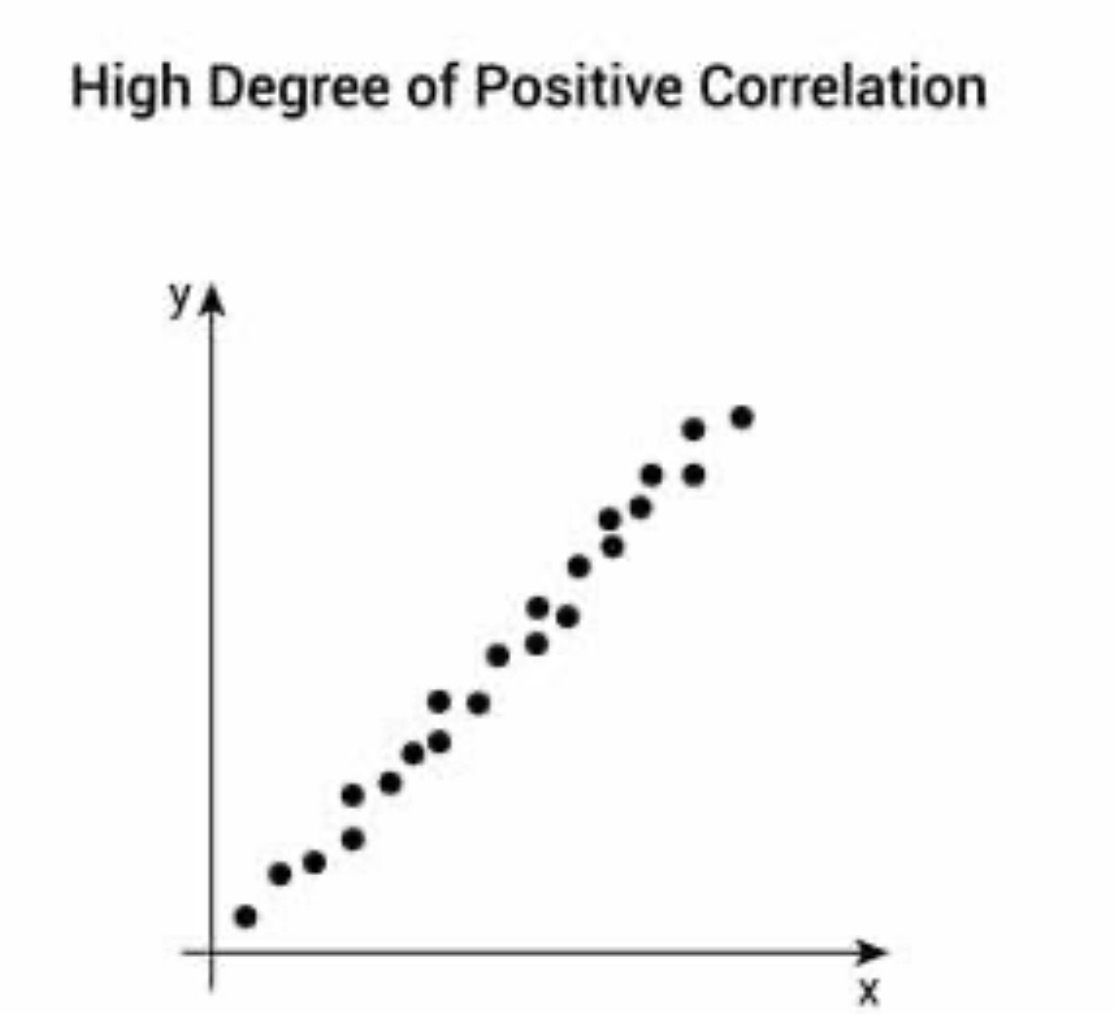
Correlation analysis is a statistical technique used to determine the relationship between two or more variables. The purpose of this analysis is to investigate the strength and direction of the relationship between variables, as well as to determine whether there is a significant correlation between them.
Correlation analysis is a fundamental tool in data analysis and research. It is used in a wide range of fields, including finance, economics, psychology, and social sciences. The analysis is often used to identify patterns and trends in large datasets and to test hypotheses about the relationships between variables.
In carrying out correlation analysis, it depends on the nature of the Data. It can be done with the Graphical Method, Algebraic method, scatter diagram, and Karl Pearson coefficient of correlation. The most common measure of correlation is the Karl-Pearson correlation coefficient. Correlation tells us the direction of the relationship (positive/negative) and the strength of the relationship (strong/weak). This coefficient measures the strength of the linear relationship between two variables and ranges from -1 to +1. A correlation coefficient of +1 indicates a perfect positive correlation, while a correlation coefficient of -1 indicates a perfect negative correlation. A correlation coefficient of 0 indicates no correlation.
It is important to note that correlation does not imply causation. Just because two variables are correlated does not mean that one causes the other. There may be other variables or factors that are influencing the relationship between the two variables.
Correlation analysis can be used in many ways. For example, it can be used to determine the strength of the relationship between two financial assets. If two assets have a strong positive correlation, it means that they tend to move in the same direction. This can be useful for investors who are trying to diversify their portfolios.
Correlation analysis can also be used in social science research to investigate the relationship between two variables. For example, researchers might use correlation analysis to investigate the relationship between income and education. If there is a strong positive correlation between income and education, it suggests that people with higher levels of education tend to earn more money.
There are some limitations to correlation analysis that should be considered.
Non-linear relationships: Correlation analysis only measures linear relationships between variables. If the relationship between variables is non-linear, correlation analysis may not accurately capture the underlying association.
Outliers: Outliers, or extreme values, can strongly influence the correlation coefficient. A single outlier can significantly impact the correlation between two variables, potentially leading to misleading results.
Confounding variables: Correlation analysis assumes that no other variables influence the relationship between the two variables being analyzed. If there are confounding variables that affect both variables simultaneously, the observed correlation may be spurious or misleading.
Restricted range: Correlation analysis can be sensitive to restricted ranges of values in the data. If the data exhibit limited variability, the correlation coefficient may not accurately represent the true relationship between the variables.
Data quality and measurement errors: Correlation analysis relies on accurate and precise measurements of variables. If there are measurement errors or inconsistencies in the data, the calculated correlation coefficient may not accurately reflect the true association between the variables.
Despite these limitations, correlation analysis is a powerful tool for investigating the relationships between variables. It can be used to identify patterns and trends in large data sets and to test hypotheses about the relationships between variables. It is important to use caution when interpreting correlation coefficients and to keep in mind that correlation does not imply causation.

 FINANCIAL KEY PERFORMANCE INDICATORS MANAGERS SHOULD WATCH FOR IN DECISION MAKING- PART 2