
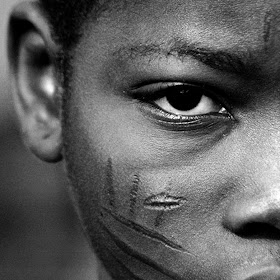
Abiku is a term used in the Yoruba culture to describe children who are believed to be reborn repeatedly. It is derived from the words “abi” which means “that which is born” and “iku” which means “death”. Abiku children are believed to be the offspring of the spirits who choose to come to the human world briefly before returning to their realm.
Abiku children are the cause of much grief and sorrow for their parent, who have to endure the pain of losing them repeatedly. The high rate of infant mortality in some Yoruba communities is often attributed to the presence of Abiku children. This is because Abiku children are believed to be more susceptible to illness and disease, and are thought to be more likely to die at a young age. Another reason is because they are believed to be fated to die and be reborn repeatedly until they decide to stay in the human world permanently. This belief can lead to parents being hesitant to invest too much love and attention into their Abiku children, as they know that they may not be able to keep them for very long.
In the Yoruba culture, there are various beliefs and practices associated with Abiku children. One such practice is the use of charms or amulets, which are believed to have the power to keep the Abiku child in the human world. These charms may be made from a variety of materials, including hair, nails, and clothing belonging to the child, and are typically worn as a necklace or bracelet. It is believed that the charm will make it difficult for the spirit world to claim the child, thus keeping them safe in the human world.
Another common practice is the use of marks or scars on the child’s body, which are believed to identify them as Abiku and protect them from harm. For example, a mark may be made on the child’s forehead, which is believed to deter the spirit world from taking the child.
Similarly, some Abiku children may be given special names, which are believed to have protective powers and help to keep the child safe.
In some cases, Abiku children may also be given special treatment in order to prevent them from leaving. For example, they may be given more attention and care than other children, in the hopes that this will make them want to stay in the human world. In some cases, parents may also avoid naming their Abiku child until they are sure that they will survive, in order to avoid attracting the attention of the spirit world.
In some cases, Abiku children are believed to have special powers and abilities, such as the ability to communicate with the spirit world and to predict the future
Overall, the beliefs and practices associated with Abiku children in Yoruba culture reflect a deep sense of respect for the power of the spirit world, and a desire to protect and care for children who are believed to be born with a predestined fate. Abiku children has a significant impact on the culture and practices of Yoruba communities, particularly in relation to infant mortality and the way that parents approach the care and upbringing of their children. These practices demonstrate the complex and nuanced ways in which cultural beliefs and practices shape the way that people understand and care for their children.
