
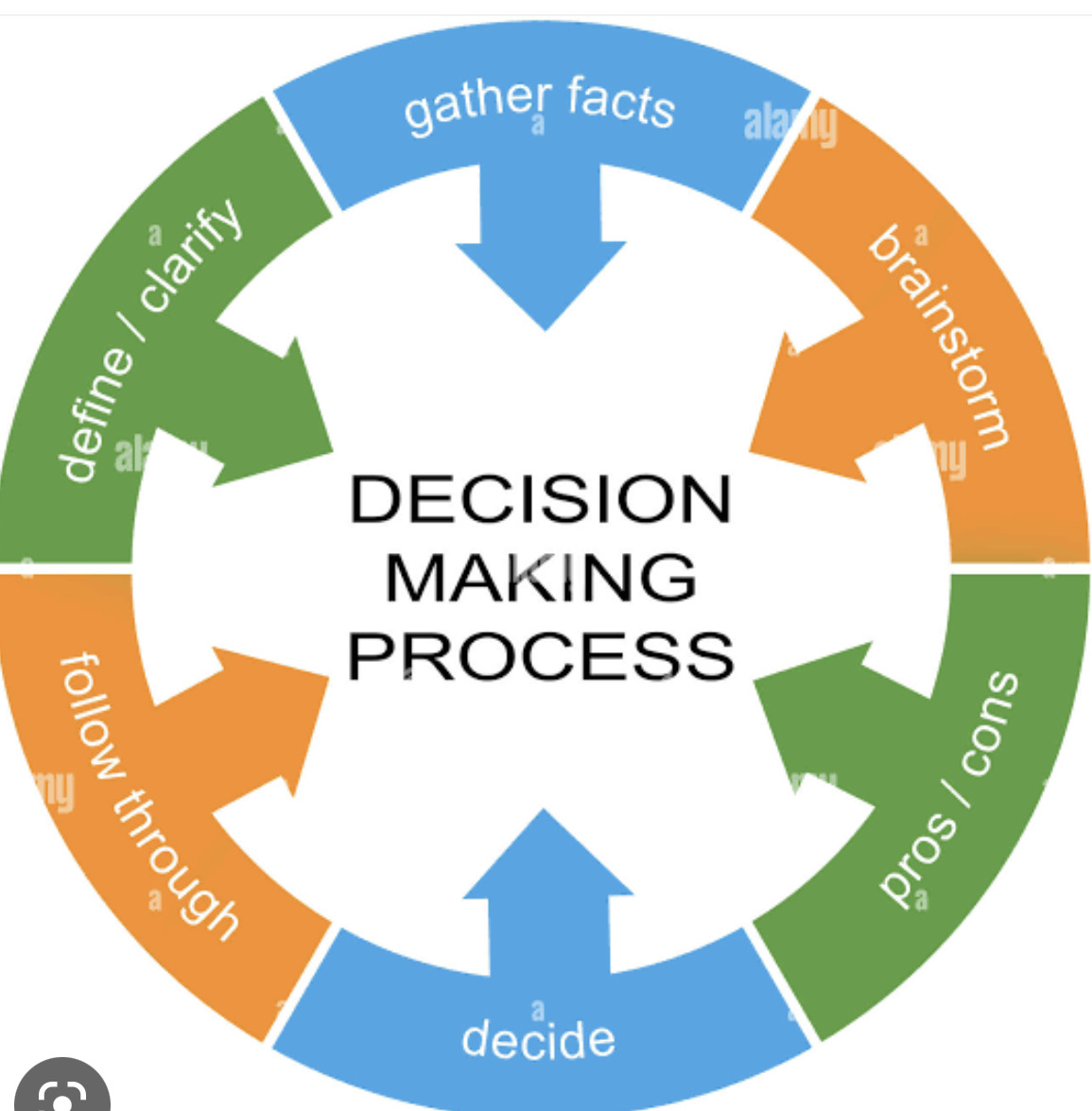
So many times, we tackle the symptoms of the problem without addressing the main issue, to make better decisions, we must not rely on instincts. Motivated reasoning is a bias reasoning, and it is done through emotions. This is not logical. The bigger question is, how do we make decisions logically? In isolation, nothing means anything except in context. Context is king in decision-making.
Decision-making is a fundamental aspect of life, both in personal and professional contexts. At its core, decision-making involves selecting among different options or courses of action based on available information, preferences, and values. Effective decision-making requires careful consideration of the relevant factors and a systematic approach to evaluating and selecting the best option.
Here are some of the fundamentals of decision-making:
- Understanding the context: The first step is understanding the context, to make a well-informed decision.
- Identify and define the problem: The next step is defining the problem or issue that needs to be addressed. You need to be specific.
- Define your objectives: Once the problem has been defined, the next step is to gather information relevant to the decision. This involves identifying the goals or objectives of the decision and any constraints or limitations that need to be considered.
- Develop alternatives to achieving the objectives: Based on the information gathered, the decision maker should identify a range of alternative options or courses of action. These alternatives should be evaluated based on their potential to meet the goals and objectives of the decision. Do not shut out alternatives or suggestions even if it does not make sense.
- Develop evaluation criteria: The next step is to evaluate the alternatives identified in the previous step. This may involve weighing the pros and cons of each option, assessing the risks and benefits, and considering any trade-offs that may be necessary.
- Analyze the alternatives: Analyse the alternatives to know which one best address the problem and the objectives.
- Make a choice, and take that decision: Once the alternatives have been evaluated, the decision maker should select the option that best meets the goals and objectives of the decision. This may involve considering the costs and benefits of each option, as well as any potential long-term consequences.
- Develop an action plan: Once a decision has been made, it must be implemented. This may involve taking specific actions or making changes to existing processes or procedures. It is important to monitor the implementation of the decision and make any necessary adjustments as needed.
Logical reasoning is a mental activity that aims to conclude rigorously. it is important to recognize that decision-making is not always a linear process. Sometimes, new information may come to light or circumstances may change, requiring a reassessment of the decision. Effective decision-makers need to be adaptable and flexible, and willing to adjust as needed to ensure the best possible outcomes. By following these fundamentals of decision-making, individuals, and organizations can make more informed, effective, and successful decisions.

 CONTRACT BIDDING DOCUMENTS