
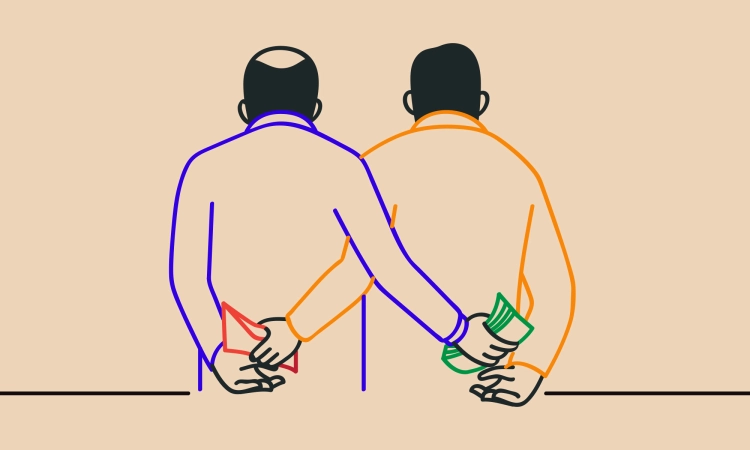
Bribery and Corruption, as previously discussed, is the switching of cash, materials or goods. This exchange is done to get certain things done through illegal means or to fasten up the process. We have already established the fact that this exchange is done to get certain things done through illegal means or to fasten up the process. Although everyone opposes this concept, we all indulge in bribery of some kind. If you check everywhere around you in the world to find someone who has neither given nor accepted bribe, you are extremely unlikely to succeed. Bribery is around us and is predominant in all the little and big things.
In our ABP class, the guest facilitator also laid emphasis on the causes of bribery and the ways to eliminate it from our society. Greed advances to an uncontrolled desire for wealth or control, with no regard whatsoever to ethical boundaries. The root cause is the inborn human impulse to amass external goods when it is not dependent to personal integrity. Is integrity and honesty less valued than it used to be? Is there a need for moral behaviour or other types of incentive that were once stronger?
Another factor that could be the reason for the increase in bribery and corruption is the decline of personal moral compassion, either due to lack of training or negative learning encounters, developed by downplaying bad conduct in the past. Should moral education be re-evaluated or re-emphasized? Is it time for a personal reexamination with honesty and remorse, to learn more about its influence in promoting positive learning?
The third reason that could have led to the decline of morality is lack of accountability when working in public or private organizations. This is seen, for instance, in those who use politics for their selfish gains and benefits, instead of serving the common good through politics. However, the question is can we promote politicians and leaders with a true self less spirit?
Another reason is low awareness or lack of bravery to condemn corrupt behavior and situations encouraging corruption. That is the case of someone who is aware of exploitation and refuses to speak out. And this happens when you simply cover for the corrupt people, perhaps assuming that it is not your problem, or perhaps out of fearfulness, so as not to attract problems to yourself and your family. Would it help to promote a society void of bribery and corruption?
Cultural environments that overlook corruption. Such as defending or even appreciating crooks. Or enhancing false arguments with no moral basis (“everyone does it”; “take advantage while you can”; “life is short”). Who ought to promote that culture? Social leaders? Everyone?
Another factor that contributes to bribery and corruption is slow and unreliable judicial processes. Speedy processes can have a greater personifying effect than those that, by the time the sentence is given or pronounced, the crime already is almost forgotten. Justice requires appealing processes and warranties, but not if it means slowing down the administration of justice. Do we need more judges, but also better processes?
We can take measures at an individual level to eliminate bribery and corruption. Always pay the fine for your crime instead of bribing the government official or authority. Likewise, teach honesty lessons to children in schools so they grow up to be sincere and not practice bribery at any level. Remember, that charity, they say, begins at home.
##EMBA 28

 FOUR COMMON MISTAKES TO AVOID WHEN FORMULATING PROBLEM STATEMENTS