
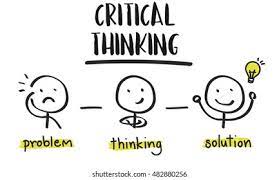
Managers and leaders of organisations are confronted with decision problems on a day-to-day basis. As much as we try to delegate some routine decisions while also having a routine framework of attending to a few due to their consistent nature, we have a few decision problems that have to be analysed and evaluated within scenarios, perspectives and available facts to ensure an informed judgement is being made.
Most decision-makers lack the understanding of what objective they seek to achieve with their decision, in order words what success will look like after making those decisions. Hence there should be a guided flow of activities from conceiving or formulating the problem all through to making the decision and monitoring the effect of the decision. This is where the concept of critical thinking is introduced, which involves the analysis of available facts, evidence, observations and arguments to form a judgment. In critical analysis, there is more thinking about the thinking than the thinking itself. What is common is that during the analysis and alternatives evaluation towards making decisions, the decision makers are more prone to using the approach where individuals will try to justify their alternatives as to why their analysis of criteria should be considered to take the most weight in the decision-making process without keeping an open mind as to new ideas and perspective of seeing the issue. This is mostly the case when we are already drawn to a particular scenario based on the facts that have been presented.
Another major pitfall decision-makers exhibit is that they spend more time treating and analysing the symptoms or falling out of the main problem and not addressing the problem itself. For example, if the main problem of an organisation is a consistent decline in profitability, decision-makers might be more drawn toward analysing their pricing and spending so much time on ways in which the pricing strategy could be restructured to increase the profit of the organisation. Meanwhile, various factors can contribute to this profit decline that might not be attended to by the decision-makers. So, for a decision-making process to be effective, the relevance of getting the decision objectives right should be re-emphasised.
Having successfully determined what the decision objective is, the various alternatives that would lead to the decision objectives should also be clear as in most instances we often switch decision alternatives with decision criteria which might lead to a decision with no informed basis. The criteria will assist in knowing which decision alternative will speak more to the objective of the decision which is the reason why we ought to know which criteria hold more weight to the objective being considered and this will guide in ensuring that weight is assigned to criteria s they are of importance to the objective we seek to achieve.
In conclusion, strategic decision-making should follow a well-structured process and also involves a lot of critical thinking and atmosphere that allows for various perspectives to be birth to ensure that at the end of the day, there is a reasonable and substantial basis for the action plan we have resolved to take which will always be a reflection of the decision.

 Learning Patience