
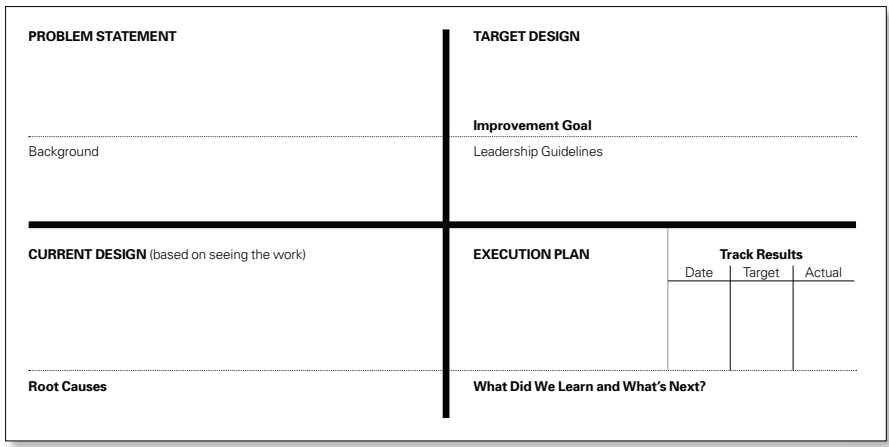
Decision-making has to be the most underrated skill anyone can have. It baffles me how something termed to be “Simple” makes the difference between a profitable and a rather static enterprise. It goes without saying that “Where we are today is a result of the decision we made”.
The ability to solve problems is to make critical decisions on the phenomenon, which is the key role of a leader.
Academic research suggests that the ability to incorporate new ideas and technologies into existing ways of doing things plays a big role in separating leaders from the rest of the pack, and studies clearly show that it is easier to manage a sequence of bite-sized changes than one huge reorganization or change initiative. But, while many organizations strive for continuous change and learning, few achieve those goals regularly.
Solving problems involves making critical decisions that inherently involve;
• Stating the problem
• Finding the root cause(s)
• Proffering solutions
This process involves both conscious and automatic processing. These processes involve Identifying the Problem -> analyzing observed data -> Formulating root causes -> Proffering solutions.
It was in this course I found out that the first step to making profitable decisions as a leader is Identifying the Problem.
A good problem statement has five basic elements:
• It references something the organization cares about and connects that element to a clear and specific goal;
• it contains a clear articulation of the gap between the current state and the goal;
• the key variables — the target, the current state, and the gap — are quantifiable;
• it is as neutral as possible concerning possible diagnoses or solutions; and
• it is sufficiently small in scope that you can tackle it quickly.
Similarly, in the past week, I applied the concept of problem framing to a technical issue at work and the result was amazing. A technical issue had cropped up on the company’s website which constrained the upload of images to the site and the conclusion reached by the developing team was to fix that problem alone and get it done with. The knowledge I gained on Decision making was profitable to us as I used the “Scope down” method to identify the problem and root cause of the problem.
Using Deming’s PDCA cycle, or Plan-Do-Check-Act, I thought it wiser to assess the website design and probably have a full overhaul of the design to avoid subsequent technical breaks. The developing team advised against this but went ahead to provide a full analysis of the cost and benefits of the two options. After carefully examining both options, the design overhaul emerged as the better option with lasting benefits and today we have a functioning newly designed website.
This yielded optimal results for the organization as it generated a 30% increase in traffic flow and brought new clients.

 Corporate Financial Accounting and Investment Analysis