
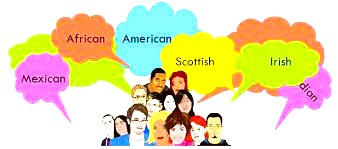
Ethnicity is not vague because it is your natural roots and is entrenched in cultural norms and values. Just like you cannot dissociate yourself from your family, it is the same with your ethnic group. Everyone should be proud of his ethnicity because every ethnic group has uniqueness and enriches our diversity.
However, when you talk about the state of origin- it is another kettle of fish. First and foremost, state of origin is a construct imposed on us by the government, which is helpful for only administrative convenience. After all, when I was born, my state of origin was Oyo State, but currently, Osun State after General Babaginda decided to create additional 12 states in 1991.
The state of origin should be scrapped and replaced with the place of residence. There are a lot of people who have never even been to their state of origin before. When I first requested my International Passport, I wondered what the question “where is your state of origin” had to do with anything. They demanded a local government attestation letter. When I got to where to obtain it, the question they asked me was enough to put me off: ‘what towns are close to your town’? ‘What is the name of the popular secondary school in your town’? How am I supposed to know that if I have never been there? So, you have people parting with some money just to receive the letter.
This issue is deep-rooted and goes beyond Igbos trying to contest an election in Lagos or Yorubas trying to contest an election in the North. This happens even at an intra-state level. A former colleague of mine was born and bred in Iseyin- his father started living in Iseyin when he was 7 years old, but originally, they were from Ilora in Oyo State. This colleague of mine wanted to contest for chairman of Iseyin Local Government, and they vehemently opposed him- he should go to his home town if he wanted to contest.
We have seen a lot of disconnects between the elected officials and the plight of the populace because they do not live among them. A former governor in the southwest of Nigeria had lived all his life in Lagos. When he wanted to contest in his “home state, ” he bought a house there for a sense of belonging. He was disconnected from his people because he didn’t understand their needs; instead, he imposed the mega-city needs on them and failed. A resident of that state, even if he is not an origin of the state, would have done well.
Someone once mentioned that he pays more than 5 million naira as tax per annum, yet he wasn’t allowed to vote because he isn’t from the state. Suppose a citizen performs his civic duty and obligation and contributes far more than the people who are ‘indigenes’. Why should he be denied an opportunity to enjoy economic and political rights and benefits from that state based on sentiments of ethnicity? Strangely, someone who hardly pays any tax in his indigenous state or has any significant contribution to the state suddenly remembers his ‘people’ when he wants to govern.
I urge the federal government to consider this in their policies and force the implementation. A Yoruba man living in Abuja should be the perfect description, not an Abuja indigene- because Abuja is a construct that can change tomorrow. Anyone that wants to contest an election must be a partial or full-time resident of the state for at least ten years and show evidence of his obligation to the state for that period. Do you agree?

 Decision making in the war room