
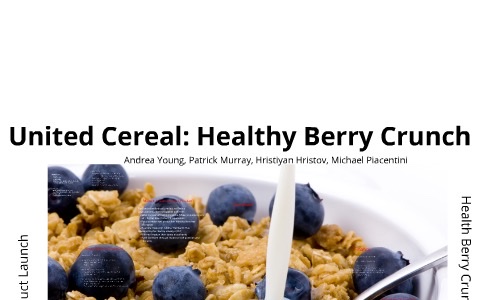
As part of the ABP course, we were given the United Cereal case study to analyse in class, I would therefore like to share my insight for your reading pleasure.
United Cereal, a well-established player in the breakfast cereal industry with over a century of experience, is faced with a difficult decision regarding the launch of its latest product (Healthy Berry Crunch) in France. As a multinational company with global presence, the vice president of the company, Lora Brill, is facing a crucial choice between either adopting the concept of Euro brand and launching Healthy Berry Crunch throughout Europe and focusing solely on France for the launch of the product. The stakes are high for both United Cereal and Brill’s career. A wrong decision may create a bad dent in her career as she is aware that the changing market and competitive conditions in Europe make the launch of Healthy Berry Crunch a risky proposition. However, she is also aware that making changes to a long-term successful company such as launching a new product in multiple markets could help to mitigate this risk, maximise the product’s potential success and boost the company’s revenue. This decision requires Brill to weigh the potential benefits and drawbacks of launching the product as a Eurobrand, as well as the organisational challenges that would come with such a launch.
Problem Identification
The main problem identified is whether to launch the product in France and make it United Cereal’s first Eurobrand, while ensuring effective implementation and minimizing risk to the company and Brill’s career. The changing market and competitive conditions in Europe have made this decision complex, and Brill must consider the financial implications and challenging organizational questions that come with either choice.
Decision Options
Lora Brill is not sure what to do. The options before her are:
- Authorise the launch of Healthy Berry Crunch in France or as the company’s first Eurobrand
- The level of organization that needs to be put in place to ensure the implementation of the project.
Problem Analysis
Authorise the launch of Healthy Berry Crunch in France or not
One strong argument in favour of the decision to launch Healthy Berry Crunch in France is the relatively low competition in the fruit-based market, with Kellogg’s Special K being the only direct competitor. Additionally, there is a growing trend of interest in healthy breakfast foods in France, which could provide a receptive market for the new product. However, several factors pose potential threats to this decision. They include:
Intention to Repurchase: There is concern about the intention of customers to repurchase the product, as initial testing revealed that fewer than six out of 10 customers are likely to make a repeat purchase. This is likely due to the company’s history of underperforming with its Healthy Crunch product, which has seen stagnant growth in recent years.
High cost of implementation:
Additionally, there is a high cost associated with implementing the launch in France, totaling USD20 million. This presents a significant financial risk, particularly if the company is unable to sustain the cost. Furthermore, there is a threat of losing market share if the launch is delayed, as rumours suggest that Cereal Partners (UC’s second largest competitor) may be planning to release its own version of a healthy cereal, Berry Burst Cheerios, in France.
The level of organisation that needs to be put in place to ensure the implementation of the project
The successful implementation of the project hinges on the level of organisation that will be put in place. This decision raises questions about the adequacy of the existing organizational structure in Europe and whether it should be maintained in the future to support the launch of Healthy Berry Crunch as a Eurobrand. The required level of organisation may also impact the allocation of resources, the decision-making process, and the overall success of the project.
UC’s European and US operations have distinct strategic approaches. In the US, brand managers lead cross-functional teams and manage each brand as a profit center, whereas in Europe, national subsidiaries are managed by country managers with the autonomy to make local product and marketing decisions to maximize profits. This approach was intended to adapt to diverse European market conditions, but concerns have arisen regarding its effectiveness, particularly due to its potential to increase costs through redundancies in certain roles.
Launching Healthy Berry Crunch as UC’s first Eurobrand will require a thorough assessment of the current organisational structure in Europe to ensure a successful multi-market launch.
Analysis of the Breakfast Cereal Market (External)
The examination of the breakfast cereal market indicates that the competition is intense, with only a few big players holding a considerable portion of the market revenue. Specifically, the three leading companies, Kellog, UC, and Cereal Partners, command 63% of the market share. Owing to their size, larger firms like UC enjoy significant advantages in procurement, distribution, and marketing. The adoption of national subsidiaries has bolstered UC’s market position relative to its competitors, enabling it to maintain a top-three position. However, its position is weakened by a lack of growth in demand, frequent product launches, minimal buyer switching costs, and stiffer rivalry from rivals. #EMBA28

 Business Intelligence Tools