
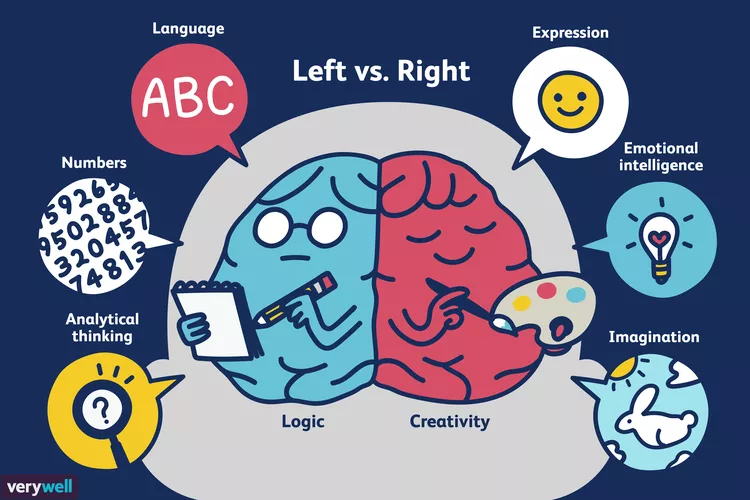
The notion that beyond an art, there is also a science behind the problem solving in business, has recently come to me as a revelation. The first time I saw the Lagos Business School Modular MBA course title – Analysis of Business Problems – I became quite curious as I have faced many decision making scenarios in my 12 years of experience in Energy, hospitality management and entrepreneurship sectors.
During my Engineering academic training in the UK, I deduced problem solving was a matter of understanding the engineering principles and using the appropriate formula. However, when I left tertiary education and entered the real world of work as an Energy consultant, I started seeing problem solving as more of a mixed science of sorts. I soon realized that it is an interplay of knowledge of the subject matter, ability to deliver workable ideas, relationship management and experience.
By 2013, emigrating from the calm western shores of the UK into the erratic business scene of Nigeria to run a hospitality outfit, I quickly realized that business problem solving is an enigma to be understood. This I believe could be attributed to 3 main factors: The subtle effect of culture in the Nigerian work environment, the unpredictable macro dynamics that affect businesses and the average level of exposure and education of the individuals in the sector you work in.
To put this frame of thought in perspective, I’ll recount a story. As a newly appointed Operations Manager in a recently renovated hotel, I walked in at the usual 8am morning shift time only to discover that 80% of the operational staff of the morning shift had not arrived yet. Without prior notification from the staff bus driver (who reports directly to me) and with an event of 150 guests to execute that morning, I had to think on my feet to ensure productivity was maintained and guests satisfied. As though the situation wasn’t dire enough, I knew I had yet another challenge of getting the support of my easily irritable yet influential elderly colleague (the Night Shift manager) who I’ve noticed has an incredibly knack of saying the line, “I have more than 35 years of work experience in the hospitality industry”, in many conversations. After much careful persuasion he agreed to stay back help me motivate the night shift staff to continue their duties and ensure we deliver the event successfully. Shortly after, I proceeded with reaching out to my driver to know why the staff bus had not yet come with the morning shift staff. The root cause of the delay was that they were stopped and held by the govt agency, VIO, for particulars of the vehicle which we had renewed but he (the driver) had not gone to pick up as scheduled a week earlier. A telephone conversation with the head of the VIO unit, in which I calmly explained the situation and pleaded for his understanding, was all it took for the bus to be released. Upon return, I engaged my driver to understand his irresponsible attitude towards his duties. Through dialogue, I discovered that a family dispute was the cause and I counseled him with encouragement. Few months later, I could count him as one of my most motivated staff.
The above recollection from my experience is an example of why I believe that beyond the science and methodology of solving business problems, there is a subtle art to it. This elusive art that involves a keen understanding of the cultural and social factor of your business environment makes your decision making approach more robust and successful in Nigeria.
