
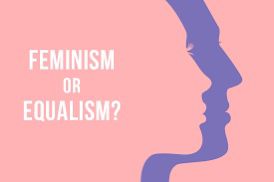
The concept of Feminism is often misunderstood and misinterpreted by many individuals, which has led to the rise of alternative movements such as equalism. While the concept of equalism seeks to promote equality like feminism does, it is crucial to understand the difference between these two ideologies to avoid wrong use or application. So why should feminists say “I’m a feminist and not an equalist”?
Feminism as defined by Nigerian award-winning author Chimamanda Ngozi Adiche, can be defined as the social, political and economic equality of the sexes. The need for feminism arose in the west when women were treated more as property to be owned and protected by men and not as a people capable of voting, travelling without the man’s consent, working certain jobs or being in positions of political power and the many other forms in which this played out. The women revolted and thus feminism was born. The early feminists fought for equal rights to vote, for equal job opportunities, and equal pay amongst other things and the fight till date continues.
On the other hand, Equalism as defined by the Collins Dictionary is a practice, policy and a belief that all human beings should be regarded as absolutely and completely equal; regardless of gender, race, age, ethnic origin or any other factor that defines our individual differences. While these two ideologies seek for equality, feminism emphasizes equality for women who have been historically marginalized, denied access to certain opportunities and regimented to domestic tasks. A ripple effect of this, has brought about the poor socialization of young women and girls especially in most developing countries where there is little to no provision for girl child education. According to UNESCO 2013 there are still 31 million girls of primary school age out of school. 17 million of these girls are expected never to enter school in their lifetime and there are 5 million fewer girls than boys in primary school.
Equalism fails to recognize the specific issues that women face. It assumes that everyone is equal and ignores the fact that women have been historically marginalized. For one to say “I’m equalist and not feminist” would simply be to perpetuate the status quo and not address the real problems that is, it is the women who have been denied access to make decisions and play certain roles in a society that they form a big part of and contribute heavily to.
To conclude, I’ll leave you with an example of what happened during the Black Lives Matter movement to help provide further clarity. The recent Black Lives Matter movement which was aimed at raising awareness on the need to preserve and protect dying black American citizens, was hijacked by opposition with the “All lives matter” movement mostly perpetuated by White American citizens. While the Black Lives Matter movement aimed at highlighting the challenges faced by Black Americans, White Americans argued that every single life mattered—which is a valid argument, just at the wrong time. However, the problem was not the question of if all lives mattered, but brutalization, reckless killings and racial profiling of black American men and women by the American police force. Black American men and women were the endangered and marginalized group of people therefore the need to state their problem arose, hence, Black Lives Matter.
#MMBA4

 The Science and the Elusive Art of Solving Business Problems in Nigeria