
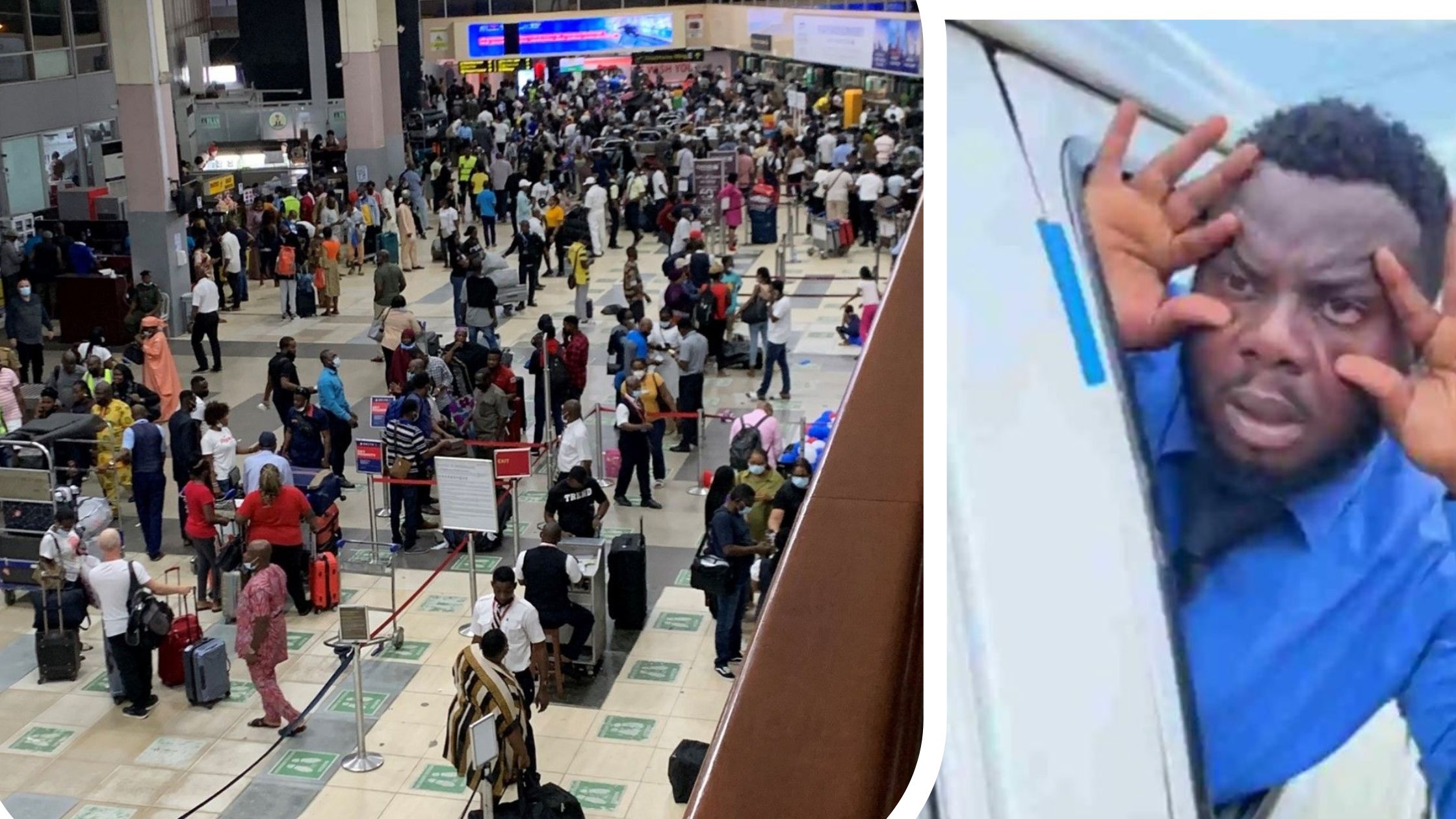
The ‘Japa Syndrome’ is the latest slang making the waves in Nigeria. It is a term that refers to the mass exodus of professionals from Nigeria to developed or developing countries in search of greener pastures.
Almost all sectors of the Nigerian economy have been badly hit by the menace and have almost paralysed some businesses, most noticeably in Nigeria’s financial, manufacturing, consulting, information technology, educational and health sectors.
The ‘Japa Syndrome’ is most common among professionals at mid to executive levels in their career journey with the majority in their youthful age.
Some of the reasons why ‘Japa’ has become a norm:
1. Unemployment or underemployment – the National Bureau of Statistics, NBS unemployment rate in Nigeria currently stands at 33.3%, with underemployment at 22.8% while youth unemployment and underemployment stand at 42.5% and 21.0% respectively with Nigeria Economic Summit Group forecasting an almost 5% increase in 2023. Since the country is not favourable for employment with harsh economic situations and no concrete plans by the government to stem the tide, the professionals must look elsewhere to earn their living.
2. Insecurity and crime – the increasing insecurity and crime rate in Nigeria has made living in the country unsafe for the majority. The activities of bandits and terrorists especially ‘Bokoharam’ in the North, the incursion of and cruelty of ‘Miyatti Allah’ in the South, widespread kidnapping, and money rituals among several others continue to drive the rich and the poor (whom most times must sell all they have and at times take a loan) outside the country.
3. Poor educational system – the changing global work landscape with the emergence of new skill sets has practically shown the irrelevance of our educational system in equipping the populace with the necessary skills to compete in an age that is dominated by digitisation and information technology. Since the cost of acquiring such skills abroad is astronomical, most Nigerians had to leave Nigeria to do the menial job while also studying to acquire the skills.
4. Poor and dilapidated infrastructure – The state of our infrastructure in Nigeria is nothing to write home about. Power supply has always been unstable necessitating alternative power sources like generators and solar energy, internet facilities are unpredictable requiring multiple internet sources at a time, the road network is terrible leading to wastage of time and agricultural produce, and poor water facilities coupled with occasional fuel scarcity contributing to high standard of living for the large proportion of the populace.
These and other reasons do not guarantee an assured future for Nigerians necessitating leaving Nigeria for other countries which can afford them a decent standard of living.
To reverse the horrible tide, the following would be necessary:
1. Sound educational system – our educational curriculum needs to be reviewed in light of global demands for new skill sets with the teachers and lecturers empowered to be able to deliver the new curriculum. With the emergence of the virtual workforce, well-trained Nigerians can stay in Nigeria and work for foreign companies. This would also reduce unemployment and underemployment rates. we need to have more ‘Andelas’ through structured skill acquisition and employment approaches.
2. Improved security – our security architecture requires a major rejig and equipping to be able to combat the insecurity of lives and properties and ensuring safety for Nigerians.
3. Modern infrastructure – the governments need to adopt a public-private partnership approach in developing our infrastructure with certain incentives such as tax rebates and others given to organisations that are involved in improving our infrastructure.
4. Better economy – diversification of our economy needs to move from lips service to reality so as to ensure more activities in underdeveloped sectors in our economy such as manufacturing, agriculture, mining, sports, transport and health care can contribute meaningfully to the economy and create jobs for the populace.
All hands need to be on deck through collective and concerted efforts by all to make living in Nigeria pleasant to the populace.

 Intense Week is Actually Intense