
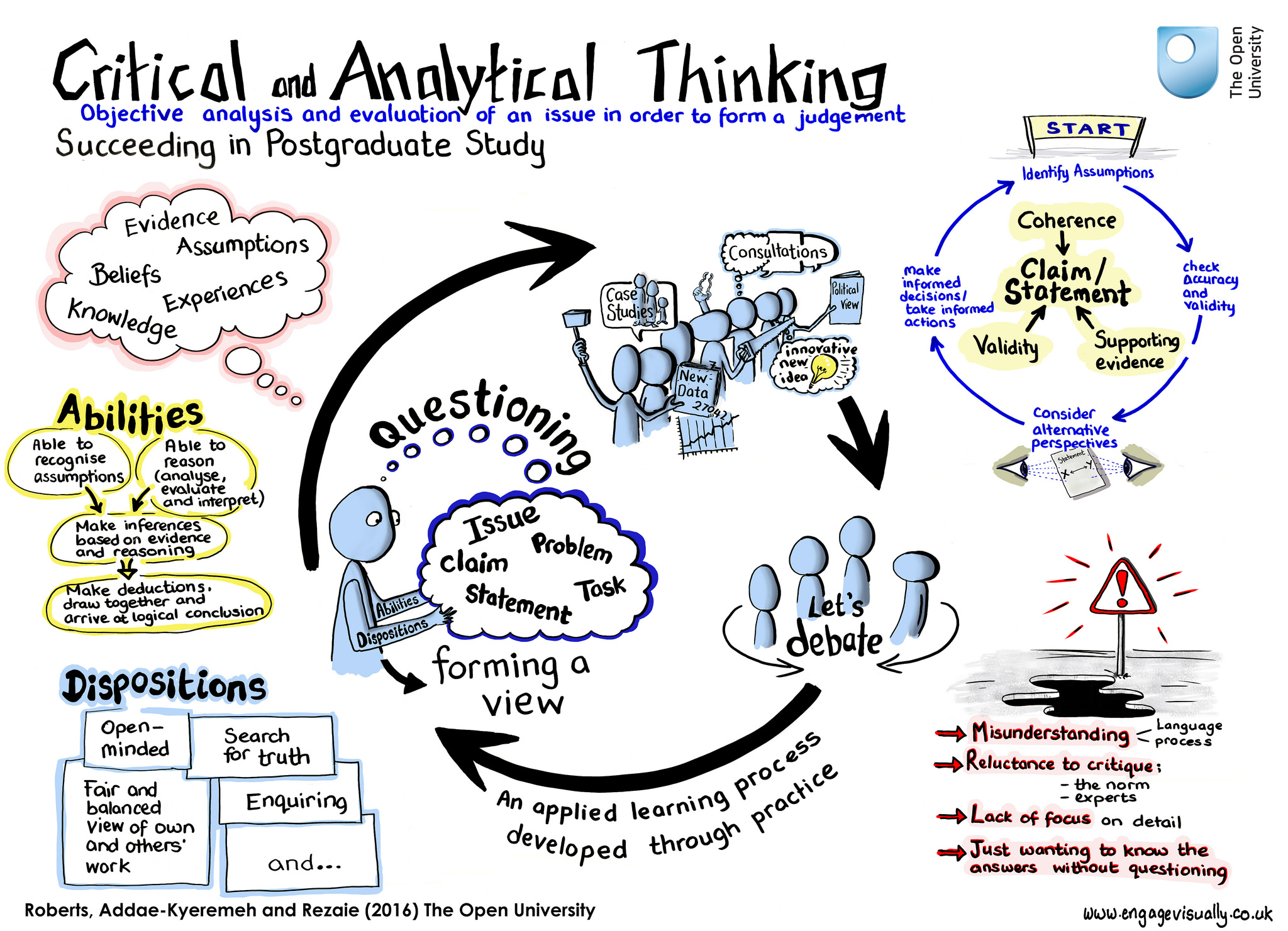
THE ART OF CRITICAL THINKING IN THE ANALYSIS OF BUSINESS PROBLEMS
In today’s business society, critical thinking is a key skill/tool for effective problem analysis. It is a process of actively and skillfully analyzing information, concepts, and arguments in order to make sound and well-informed decisions. It is the process of thinking about thinking.
The process of identifying, analyzing, and addressing problems that affect an organization’s performance is known as business problem analysis. This process calls for identifying the problem, gathering data, analyzing the data, developing solutions, and implementing those solutions. Critical thinking is required at every stage of the process to ensure that the problem is properly identified and addressed. The Analysis of Business Problems as a course is designed to facilitate one’s ability to make effective decisions within an organization and in everyday life with the goal of honing critical analytical thinking skills.
The Importance of Critical Thinking in Business Problem Analysis
Critical thinking is a fundamental part of problem-solving, and it is an essential skill in business problem analysis since it helps to pinpoint the underlying causes of issues and create workable solutions; helping business leaders to approach problems in a structured and logical way. It is relevant to the effective processing of information to make the best (optimal/educated) decision.
It is also important to note how a person’s judgement, biases and team bond can affect decision making processes and outcomes. Critical thinking enables business leaders to identify and evaluate these aforementioned that may be influencing decision-making or limiting the scope of potential solutions thus avoiding decisions based on personal biases or preconceptions.
Critical thinking is important because choices made are limited to the information known or available at the time decision is made. However, the problem with our educational systems is not teaching us how to use the information at our disposal. Thus, this gap would be bridged by following the system of asking WHO, WHAT, WHERE and WHEN. This then followed by asking HOW and WHY. This process of critical thinking helps us separate the good information from the bad, lies and half-truths. It helps leaders to evaluate the credibility of sources of information.
Strategies That May Improve Critical Thinking In Business Problem Analysis
Learning about thinking is required to be a priority for honing the skill of critical thinking. Continuous questioning of facts, statements etc., aids this effort. Decision making is an important element in the fulfilment of job roles especially amongst senior executives as poor thinking causes problems, wastes resources and promotes pain which affects the lives of people.
Wrong decisions can be avoided by change in perspective. According to the write up on Learning the Art of Critical Thinking, four steps are suggested to aid in maximizing the decision making process:
-Clarity of thinking
-Sticking to the point
-Asking questions
-Be reasonable
Another strategy that can be employed to improve critical thinking skills in business problem analysis are:
Clarify The Problem: The process of analyzing a business problem requires a systematic approach that begins with identifying said problem. It is important to clarify the problem and gather essential data before making assumptions. This may involve defining of the problem, identifying any underlying causes, and gathering data and evidence to support decision-making. In other words, the collecting of information from a range of sources, including internal data from the organization, external research, and expert opinions.
Evaluate Information: Once the problem has been defined and data gathered, critical thinking techniques can be used to evaluate the quality and reliability of the data, ensuring that it is accurate and relevant to the problem at hand. it is important to evaluate the information and assess its credibility. This may involve analyzing the source of the information, assessing its validity and reliability, and identifying any biases or assumptions that may be influencing the information.
Consider Alternative Perspectives: Critical thinking involves considering alternative perspectives and viewpoints.
Apply Logical Reasoning: Critical thinking requires the use of logical reasoning to evaluate information and make decisions.
Engage In Reflective Thinking: Reflective thinking involves taking the time to reflect on the problem-solving process and to consider how it could be improved. This may involve reviewing decisions made, identifying any biases or assumptions, and identifying ways to improve the problem-solving process.
In conclusion, the acquiring and developing of critical thinking skills is essential to have a deeper and fuller life experience as one’s perception shifts the more this ability is honed. It is an extremely essential skill for business leaders in problem analysis as it enables the approach of problems in a structured and logical way, to evaluate information and evidence, and to make informed decisions based on reliable information.
#MMBA4 #ABP

 The Porter’s Hands