
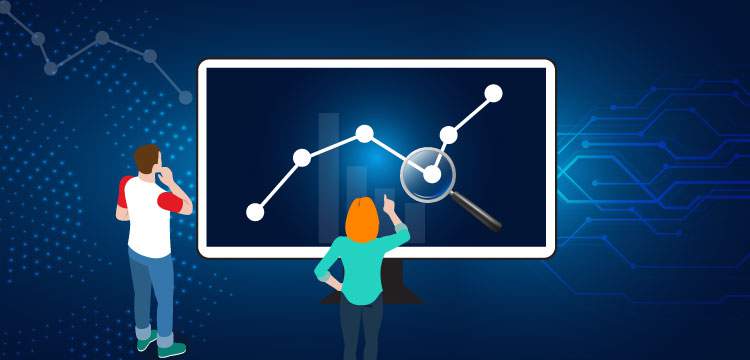
In today’s fast-paced business environment, data analytics has become a critical tool for decision-makers to gain insights into current and future trends. However, making accurate predictions about the future can be challenging, given the many variables that can impact outcomes. Backcasting, nowcasting, forecasting, and predicting are all techniques used in data analytics to provide decision-makers with valuable insights into future trends and events.
Backcasting is a technique that is often used in strategic planning. It involves working backward from a desired future outcome to identify the necessary steps and actions needed to achieve that outcome. By starting with the desired outcome and working backward, decision-makers can identify potential obstacles and opportunities and develop a roadmap to achieve their goals.
Backcasting is especially useful in sustainability planning, where decision-makers are focused on achieving long-term goals, such as reducing carbon emissions or achieving net-zero energy consumption. By working backward from the desired outcome, decision-makers can identify the necessary steps and policies needed to achieve their sustainability goals.
Nowcasting, on the other hand, is a technique used to provide real-time insights into current trends and events. It involves using real-time data and statistical models to analyze current trends and patterns and make predictions about future outcomes. Nowcasting is especially useful in domains such as finance, transportation, and weather forecasting, where decision-makers need to respond quickly to changing conditions.
For example, airlines may use nowcasting to predict weather conditions and potential flight disruptions, allowing them to make timely decisions and ensure the safety of their passengers. Similarly, financial institutions may use nowcasting to monitor market trends and make informed decisions about investments and risk management.
Forecasting is a widely used technique in data analytics that involves making predictions about future trends or events based on historical data and statistical models. Forecasting is used in many domains, including business, economics, and social sciences, to predict future demand, estimate future revenues and profits, and plan future investments and operations.
For example, retailers may use forecasting to predict future demand for their products, enabling them to optimize their inventory and pricing strategies. Similarly, financial institutions may use forecasting to predict future interest rates, allowing them to make informed decisions about lending and investment activities.
Predicting is a technique that uses mathematical models to estimate what will happen in the future based on historical data, trends, and patterns. Predictive analytics is widely used in many domains, including finance, marketing, healthcare, and manufacturing, among others. For instance, a healthcare provider may use predictive analytics to identify patients at risk of developing certain diseases or medical conditions, allowing for early intervention and prevention.
In conclusion, backcasting, nowcasting, forecasting, and predicting are all valuable techniques used in data analytics to provide decision-makers with insights into current and future trends and events. While they differ in their focus, methodology, and application, all these techniques involve making predictions about the future. By using these techniques, decision-makers can gain valuable insights into future trends and events and make informed decisions that can lead to improved outcomes and better results. As such, these techniques are critical for executives pursuing an Executive MBA, as they provide a framework for strategic decision-making and help to ensure that they can anticipate and respond to changing market conditions effectively.



 THE NEW OIL…