
The impact of tribe and religion on Nigerian politics is very well documented. It is commonplace to stumble on discussions on tribal and religious inclusion or otherwise as it concerns the election of public officials. It gets uncomfortable when extremist views begin to take root because extremism almost always results in bloodshed. While I have never experienced a war or violent revolution, my childhood memories of the aftermath of the Biafran war left a lasting impression on me.
I visited the Umuahia war museum, which was the base from which the leader of the Biafrans made his radio broadcasts. I recall my awe at seeing fighter jets, armored tanks and a battleship which had been converted into a restaurant. All of that excitement was turned into fear on learning about the effects of the war on men, women and children alike. The images and text inside the museum building helped me to draw the conclusion that wars are never the solution to any problem. I gained this profound knowledge before the age of seven and I gained it within the walls of a museum. Museums are great places to learn because they provide a rich and diverse range of exhibits, artifacts, and displays that bring history, culture, science, and art to life. Museums are not just places to showcase artifacts but also offer a unique educational experience that fosters curiosity, creativity, and critical thinking. In this piece, I will explore some reasons why museums are great places to learn.
Firstly, museums provide a visual and interactive way of learning. People learn best when they can see and experience things for themselves. Museums offer a hands-on experience that enables visitors to engage with the exhibits in a way that cannot be replicated in a classroom or textbook. By interacting with the exhibits, visitors can understand how things work, how they were made, and why they are important. For example, visitors to a science museum can perform experiments and observe the laws of physics in action, while those visiting an art museum can get up close and personal with paintings and sculptures, appreciating the techniques and materials used to create them.
Secondly, museums are great places to learn because they offer context and depth to our understanding of the world. Exhibits and artifacts are curated to tell a story, providing the visitor with a deeper understanding of the context in which they were created or used. For example, a museum exhibit on the Civil Rights movement can provide insight into the political and social climate of the time, as well as the lives and struggles of the people involved. This context is crucial to understanding the significance of the movement and its impact on society.
Also, museums offer a unique learning experience that is not constrained by traditional teaching methods. Visitors are free to explore exhibits at their own pace, ask questions, and delve deeper into areas of interest. They can spend as much time as they need to understand a particular exhibit, and they can revisit exhibits if they need to. This freedom and flexibility allow visitors to learn in a way that suits their individual learning styles, which can be particularly beneficial for those who struggle with traditional classroom teaching.
In addition, museums are great places to learn because they provide opportunities for interdisciplinary learning. Exhibits often bring together different disciplines such as history, science, and art, offering a holistic learning experience that connects different subject areas. This interdisciplinary approach can help visitors to see the connections between different areas of knowledge and foster a more comprehensive understanding of the world.
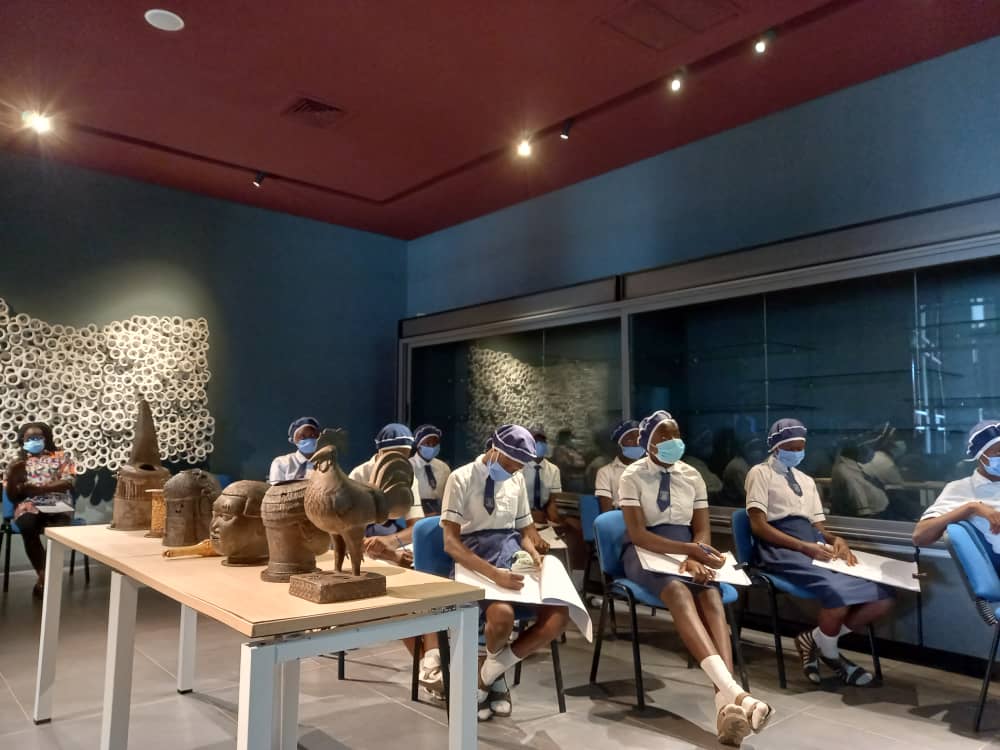
Lastly, museums are great places to learn because they offer an opportunity for cultural exchange and diversity. Museums celebrate the diversity of human cultures and offer a window into different ways of life. At the Yemisi Shyllon Museum of Art, the Precolonial Societies of Nigeria program engages secondary school children on history through experiences that are impossible to gain within the classroom. A combination of exhibition tours, interactive discussions and craft activities helps students to learn about precolonial civilizations from different parts of Nigeria. Visitors can learn about the customs, traditions, and beliefs of different cultures, gaining an appreciation for the richness and complexity of the human experience. This exposure to different cultures can help to break down barriers and promote understanding and empathy.
Sixteen years later, I revisited the Umuahia war museum, excited to relive the childhood memory that formed my aversion to war. I was terribly disappointed. The displays were shoddy, the texts unattractive, the battleship restaurant had been closed and the war machines had been defaced. As far as I am concerned, entire generations have been denied access to a life changing experience. The ability of museums to provide a visual and interactive way of learning, offer context and depth to our understanding of the world, provide a unique learning experience, offer opportunities for interdisciplinary learning, and promote cultural exchange and diversity should not be taken for granted. Museums are not just places to display artifacts but also serve as educational institutions that provide a wealth of learning opportunities for people of all ages and backgrounds.




 A New Year Gift – An Executive Master of Business Administration (EMBA) program at Lagos Business School