
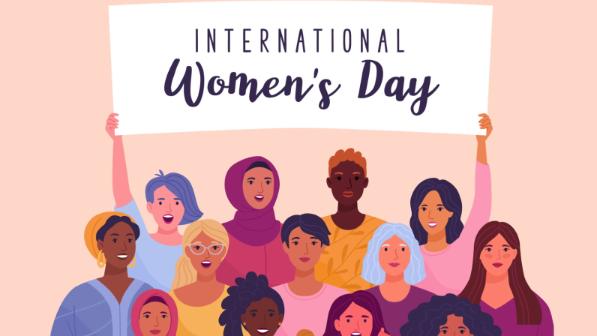
I believe women are extra special, not only because of the beauty they radiate or because they light up the home but women over the years have caused huge changes in the communities, society, and the world at large. Definitely not too much if a day is set aside to celebrate women and create awareness especially in areas where there has been inequalities or unfavourable stereotypes against the female gender.
So, globally around the world, the 8th of March is known as International Women’s Day (‘IWD’). The IWD is an annual event set aside to celebrate the achievements of women and push for rights progress. Its roots are in the U.S. socialist and labour movements of the early 20th century, particularly as women fought and strived for better working conditions and the right to vote. Since then, the event has grown not only in size but also in its scope. Focus has expanded to issues ranging from violence against women to parity in the workplace.
While no single group has ownership of the event, the United Nations is often at the forefront of celebrations after it officially recognized IWD in 1977. However, celebrations around the world are usually decentralized, though some countries recognize IWD as a public holiday, including China, Russia and Uganda.
I think this year’s theme is very apt – DigitALL: Innovation and technology for gender equality. This is because we live in a world that requires digital and technological processes. From calling our loved ones, attending a virtual course, making a banking transaction, etc. The list is definitely endless.
According to statistics by the UN, 37% of women do not use the internet. 259 million fewer women have access to the Internet than men, even though they account for nearly half the world’s population. The report also states that ‘If women are unable to access the Internet and do not feel safe online, they are unable to develop the necessary digital skills to engage in digital spaces, which diminishes their opportunities to pursue careers in science, technology, engineering, and mathematics (STEM) related fields By 2050, 75% of jobs will be related to STEM areas. Yet today, women hold just 22% of positions in artificial intelligence, to name just one’.
Technology is an area that women have left for their male counterpart. This isn’t a capacity issue but because of certain stereotypes and the way the society has labelled some jobs to be ‘manly’. This can’t be further from the truth as I have seen women excel in these field.
I remember my engineering class in the university, we were circa fifty in the class. However, women were only 10% of the entire population. Despite being few in number, they were among the top percentile in terms of performance. This is not an isolated case as there are several female trail blazers in the tech space though the numbers are not significant enough.
In closing, I will like to give a shout out to Abisoye Ajayi-Akinfolarin who left a successful career to dedicate herself to social impact. She facilitates opportunities for vulnerable young girls in Nigeria through Pearls Africa – an NGO focused on promoting the cause and advancement of vulnerable young girls and women). With more selfless people like Abisoye Ajayi-Akinfolarin, the digital divide will be erased.
#EMBA28

 Akara and Moi-moi