
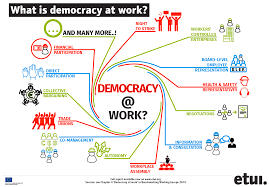
Democracy is defined as ‘the government by the people; a form of government in which the supreme power is vested in the people and exercised directly by them or by their elected agents under a free electoral system’[1]. In another view, the same term Democracy has been defined as ‘the rule of the common people’[2] based on root words (Latin) of ‘demos’ (common people) and ‘kratos’ (rule).
From the definitions above, one will tend to accept that the power of people to determine who rules over them is supreme in democracy irrespective of the nature of rulership being operated. However, the reality of the world we live in differ from the popular definition or understanding of democracy as stated above.
From China to Cambodia to Maldives to Libya to Nigeria to Mexico to United Arab Emirates, local context has played a significant role in how the people determine who rules over their affairs. This has given birth to different variants of democracy as we have today globally.
From Switzerland, where Direct democracy was practiced for long time before it fizzles out which enabled the citizens to have a say in every single government policy without any intermediary representatives or parliament. Direct democracy works well when the population is small and mostly homogeneous politically[3]. There are also Representative, Presidential, Parliamentary, Authoritarian, Participatory, Islamic and Social democracies[4]. All these variants pointed to the fact that what will be democracy depends on how a system of governance is set up to run and this will primarily differ from one society to another because people are products of their communities.
Of course, there is always a temptation to state which type of democracy is the best especially when comparing country with country using parameters like citizens standard of living, ease of doing business, security, provisions of social amenities, access to justice, etc due to general belief that type of government determine the goodness of citizens. This is not an accurate and fair criterion to determine that one type of democracy is better or superior to another because most times, conditions of citizens are not dependent on the type of democracy or government in place but how the government is being run.
According to 2021 report released by Organizations of Economic Cooperation and Development (OECD), the top three countries with lowest poverty rates in the world are Iceland, Denmark, and Czech Republic[5]. These countries do not operate same type of democracy as Iceland governance structure is based on Parliamentary democracy[6], Denmark has a constitutional monarchy (combination of Constitutional democracy with Monarchy government-type), where the powers of the monarch are limited by Constitutional Act as put in place by the Parliament[7].
Some of well-known democracies in the world like United State of America (USA), United Kingdom have not appeared as top performers in citizens welfare as reported by OECD not because the type of democracy being practices is not good for the citizens, but other factors might have affected the outcome.
Therefore, democratic practice and governance may not be only criterion to determine welfare of citizens at every time or place.
[1] Democracy definition and meaning | Collins English Dictionary (collinsdictionary.com)
[2] Microsoft Word – Democracy And Its Practises (carleton.ca)
[3] What Are The Different Types And Forms Of Democracy? (scienceabc.com)
[4] ibid
[5] Nordic Nations Leading with Lowest Poverty Rates in the World — Transcontinental Times
[7] The Constitutional Act of Denmark / The Danish Parliament

 NIGERIA DECIDES