
Medical interventions cannot be over-emphasized in a fast-developing Nation taking Lagos State with its population growing at a steady rate as a case study. Health services in the State cannot be restricted to Teaching Hospitals, Primary Health Care Centres, and Clinics alone while need to explore every other area of opportunities.
Lagos State is blessed with a rich landscape fondly referred to as the Islands and mainland, a good network of these medical assets is predominant on the mainland with the riverine communities/ Islands enjoying less concentration. The natural network of water bodies prevalent within the State poses an opportunity to improve and expand both the medical and emergency services architecture.
Lagos State Government as the custodian of her vast inland waterways network should be charged with the responsibility of regulating all activities within the inland waterways, in collaboration with the State Office mandated on Health matters must work together to ensure the availability of these Water Ambulances for either emergency cases or medical outreach to the riverine communities.
Implementation of these provisions will further assist in the delivery core mandate of both regulatory offices and will continue to ensure the safety of life and properties within and around the State Inland Waterways.
This provision should be specifically designed to ensure adequate necessity in rapidly responding to emergencies and health issues within the waterways and taking into cognizance the protection of State and other Waterways stakeholders’ lives and properties along and within the waterways channel.
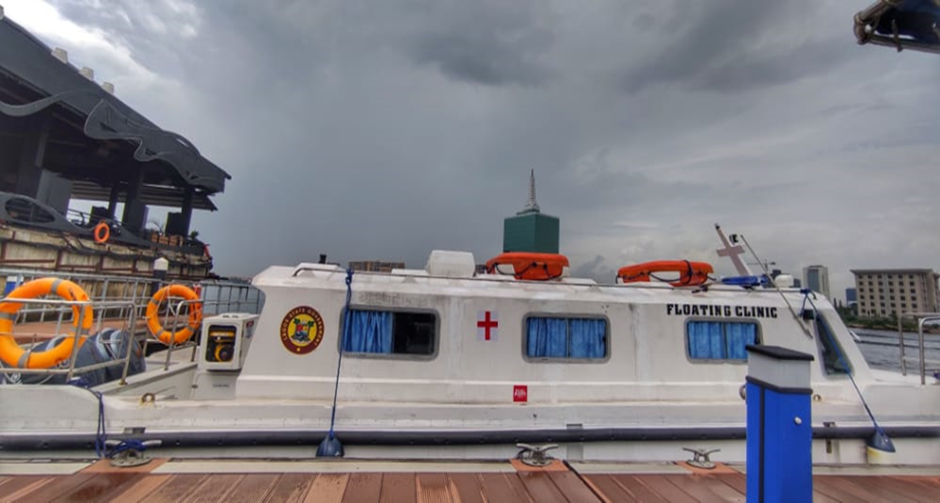
In Lagos as the focal point, there are several Islands densely populated in the State and the only means of reach is via Water transport, places like Ibeshe, Ilado & environs within Amuwo Odofin, Ajido, Awhanjigo under Badagry LGA, Olugbokere/ Abomiti around Epe, Orimedu / Siriwon / Igbekodo and Environs within Ibeju Lekki, Makoko on the Mainland: Egan /Etegbin / Irewe / Taffi & its Environs within the Ojo local Government area. These locals need the Floating clinics developed for the riverine communities to afford them immediate primary healthcare opportunities. They are:
BENEFITS:
Some of the several benefits of the provision of Water Ambulance facilities for riverine communities are as follows:
- This enables taking basic health care services to the inter lands (Medical Outreach).
- This will support Medical Emergency evacuation from the inter lands.
- It will serve as administrators of first aid and primary medical intervention units at times of emergencies around coastal/ shoreline communities.
- It will serve as an emergency support vessel.
- This will boost the confidence of the citizens in accessing adequate healthcare services irrespective of the location of work and residence.
BASIC REQUIREMENTS IN A WATER AMBULANCE
A Water Ambulance is basically a prototype of a boat that can come in various shapes and sizes, considering the terrain of usage, but must come with basic safety and health equipment to serve its purpose. The Safety requirements in this regard are: – Fire Extinguishers, Life vests, Life Buoys, paddles, Electric Bilge Pump, Sand Box, Echo Sounder, Electrical Points, and Display TV Screen.
While the Medical equipment is: – Medical Bag / First Aid Box, Suction Unit, Stretcher / IV Pole, Cervical Collar, Oxygen Bottles, Treatment Bed, Fridge, Sterilization Unit, and Drug Bag.

 My First Month in Data Analytics Class at LBS EMBA28