

I joined the first #EMBA28 Corporate Financial Accounting (CFA) class a bit apprehensive. I had reviewed the course outline and knew what to expect but I was still worried. Why?
I really did not have a reason to, as I had actually studied for and passed the Corporate Financial Management course of the Institute of Chartered Secretaries and Administrators of Nigeria and also had to analyse and use Financial Statements in the course of my work over the years. So, it was more of a ‘must-do’ and not necessarily asking why it was important to analyse and understand why financial data was useful in decision making.
Don’t get me wrong – I have over the years come to appreciate and even understand the ‘why’ which helped in no small way in making and implementing the right decisions for the companies I had worked / currently work for. But I promise you, if I had been schooled by Prof. Owolabi of the Lagos Business School, say over 10 years ago, I would have made even better business (and even personal) decisions. He succeeded in simplifying the relationships between all the four accounts in a Financial Statement and it all really makes sense now.
I had the opportunity of reviewing my Balance Sheet notes and would like to share what I have internalized that will help me, now and in the future in making business decisions from a finance point of view.
Some Ground Rules
We must all be ready to ‘unlearn and relearn’. Keep an open mind and ask questions!
The key to fully understand accounting principles is to create time to reinforce our learnings using live-cases or even the examples shared in class.
Now to the business of CFA
While Prof Owolabi delved into explaining the four accounts in a Financial Statement (i.e., The Statement of Financial Position (also known as the Balance Sheet), Income Statement, Statement of Cash flow and Statement of changes in Equity, my biggest learning so far has come from understanding Transaction Analysis in a Balance Sheet. The balance sheet had always been the outlier account for me. Now, I see the interrelationships between all four accounts, and it made me smile with satisfaction – indeed I made the right decision to come to the Lagos Business School.
My Key Takeaways
- Every transaction ‘posting’ impacts five accounts: Assets, Liabilities, Owners Equity, Revenue and Expense Accounts.
- To properly ‘post’ a transaction and achieve a ‘balanced sheet’, I must:
- identify the two accounts that would be impacted by the transactions, for example, cash account and accounts payable account.
- determine which of the three balance sheet accounts that would be impacted by my posting (Assets, Liability or Owners’ Equity).
- ‘post’ the transactions into the right accounts and check that the balance sheet complies fully with the formula below:
Net Assets = Net Liability + Net Owners’ Equity
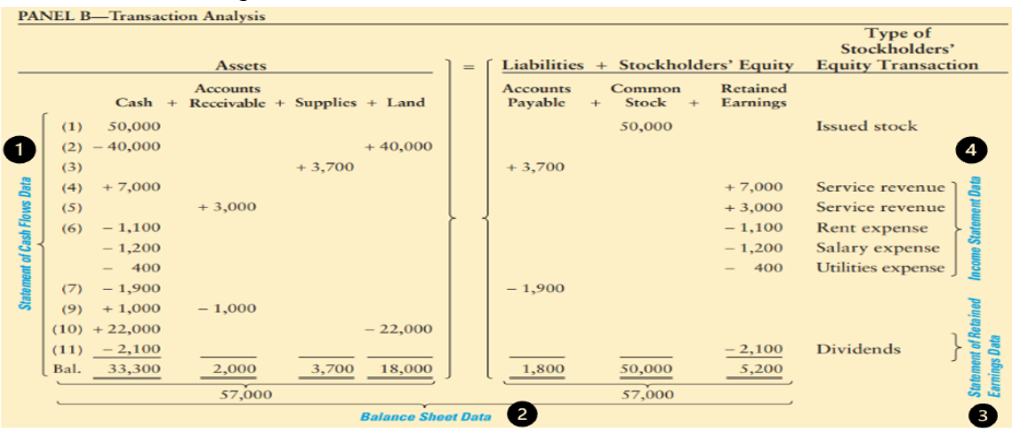
- If my Balance Sheet is not looking like the one above, then I’ll need to recheck my steps above.
- From a balance sheet, I can create my other Financial Statement accounts – super interesting!
For those of us who are non-accountants, it would now be easier to follow, understand and contribute to discussions and decisions being made by management around for instance, increasing or decreasing the gearing ratio of the business.
I look forward to my further learnings in CFA and other courses during my #EMBA28 journey.
