
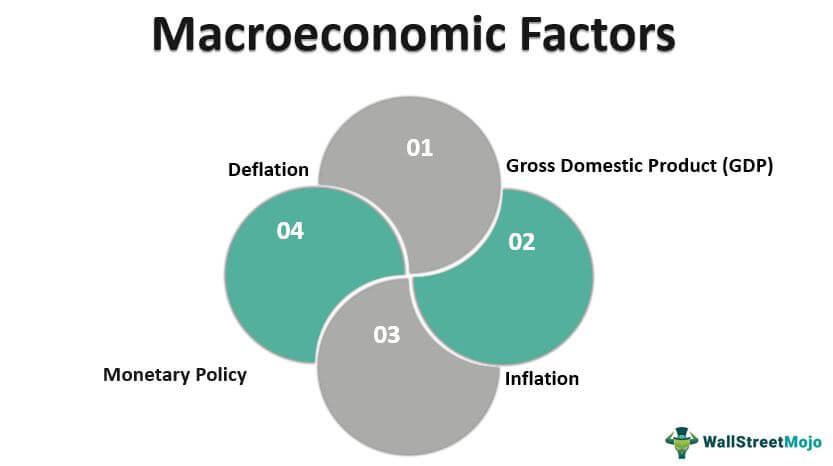
The field of economics known as macroeconomics examines the behavior of economies as a whole, including all of their constituent parts (markets, firms, consumers, and governments). Inflation, price levels, economic growth, national income, GDP, and variations in unemployment rate are just few of the macroeconomic phenomena studied by macroeconomists.
Macroeconomics seeks to answer fundamental problems like, “What are the root causes of unemployment?” Why is there price inflation? What factors lead to increased economic activity? If you want to know how well an economy is doing, what factors are driving it, and how you might make it even better, go to macroeconomics.
Exchange rate: By multiplying the Nominal Effective Exchange Rate by the Effective Relative Price Indices, we get the Real Effective Exchange Rate (EXR) that is used. An increase in the real value of the effective exchange rate is predicted to lead to a fall in bank asset quality and inflation, in accordance with effective exchange rate theory. Because Nigeria’s and South African’s economy is so reliant on imports, using a real effective exchange rate is appropriate.
MPR: This policy rate was selected because it is a very good proxy for short-term interest, which makes up the vast majority of the maturity profile of lending activities of Nigerian and South African banks in a mixed economy. Lending becomes more expensive to the borrowers, which reduces their debt servicing ability, and so the quality of a bank’s assets is projected to decline as interest rates rise. Bank profits are anticipated to increase regardless of the interest rate.
Inflation: An inflationary tendency tends to increase the market rate, which in turn leads to a reduction in credit granted by banks, so using inflation as a macroeconomic variable is based on the concept that economic growth enhances the quality of bank credit portfolios. Therefore, it stands to reason that a rise in inflation would reduce banks’ assets.
Money Supply: All the currency and other liquid instruments in circulation at the time a country’s money supply is calculated. Cash and deposits that are nearly as liquid as cash together make up the money supply.
Paper currency and coinage are issued by governments through central banks and treasuries. As a result of their mandates on banks about reserve requirements, loan extension policies, and other monetary issues, bank regulators affect the amount of currency available to the general people.
GDP: The term “gross domestic product” (GDP) refers to the monetary or market worth of all final goods and services produced within a country’s borders during a given time period. Total national output is a broad indicator of a country’s economic well-being.
Gross domestic product is normally computed once per year, but quarterly estimates are often available. In the United States, for instance, an annualized GDP estimate is released by the government on a quarterly basis during the fiscal year and on a yearly basis during the calendar year. Inflation has been taken into account to provide genuine figures for each data set included in this report.
