
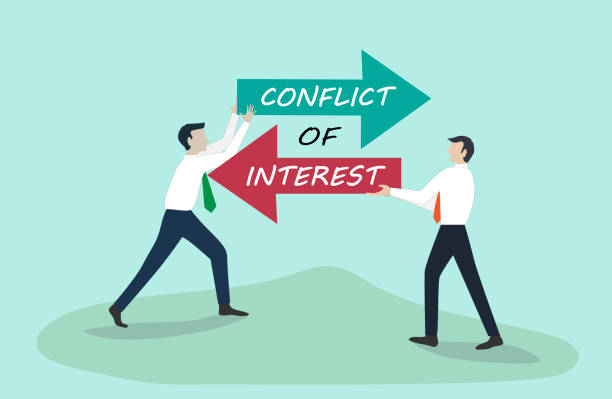
Interest is defined as a duty, commitment, or obligation associated with a certain social role or behaviour. When it comes to the workplace, a conflict of interest occurs when a person or an organisation has two or more competing interests. Conflict of interest is a severe problem in all situations. This is because when a person’s major commitments conflict with other personal interests, decision-making is typically negatively impacted.
An entity or person has a conflict of interest when their personal (or self-serving) interests collide with their professional obligations or responsibilities. Such a conflict arises when a business or individual has a vested interest, such as money, position, knowledge, connections, or reputation, which calls into doubt their ability to act, judge, or make decisions objectively.
When a person’s interests—such as those related to their family, friends, finances, or social standing—could affect their judgment, decisions, or actions at work, that situation is known as a conflict of interest. Because government organisations take conflicts of interest so seriously, they are governed. Our university, together with corporations, academic institutions, and industry organisations, sets an example by addressing conflicts of interest in our policies, rules, and operational standards. Our university is required to abide by Florida’s Code of Ethics for Public Officers and Employees, which outlines conduct expectations and reporting guidelines.
The collision between requirements and interests is known as a conflict of interest. The nature of relationships as opposed to organisational policies or local and national regulations can lead to a variety of conflicts of interest. People can quickly become prejudiced about trivial matters, such as friendship, food, or flattery, or they might be persuaded to take a certain course of action to increase their chances of succeeding in life by gaining control, status, or wealth. Conflicts can arise when someone influences or makes a decision while doing so for their own unfair, unethical, or even unlawful personal advantage. Your actions in each of those circumstances are crucial.
TYPES OF CONFLICT OF INTEREST
- Romantic or relational: This type happens when someone in a senior position prefers a worker they are romantically associated with or one they are friends with or relatives with. In such circumstances, the professional may choose to promote or recruit the person they are related to over the more qualified applicants.
- Financial conflicts of interest: can arise when someone in a top position agrees to business dealings with other organisations that potentially result in personal gains. When doing this, the organisation suffers since non-yielding procedures cause resource losses. Insider trading is widespread in the financial sector.
- Competitive conflicts of interest: These arise when a person works a second job that deters him from giving his whole attention to the company he is now employed with. It can also happen if an employee holds positions with two companies that compete with one another.
- Confidential conflicts of interest: In this situation, a top employee or professional acquires important but private knowledge they can utilise for their benefit. Insider trading, which is frequent in the financial sector, is a good example.
An adage that is quite true when resolving conflicts of interest is “When in doubt, ask.” There is no harm in asking, but by not asking, there could be significant harm to a person, an organisation, or both. To guarantee that we remove any actual or perceived conflicts of interest, it is always preferable to be open and responsible.

 Compliance with the law and Business Ethics