
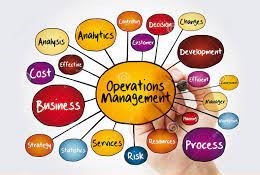
Operation management is the administration of business practices to create the highest level of efficiency possible within an organization. It is concerned with converting materials and labour into goods and services as efficiently as possible to maximize an organization’s profit of an organization.
Operation management teams attempt to balance costs with revenue to achieve the highest net operating profit.
Operation management involves utilizing resources from staff, materials, equipment, and technology. The operations manager acquires, develops, and delivers goods to clients based on the client needs and abilities of the company.
Responsibilities in Operations Management.
- Product design involves creating a product that will be sold to the end consumers. It consists in generating new ideas or expanding on existing ideas in a process that will produce new products.
It involves ensuring that the products sold to consumers meet their needs and match current market trends.
- Forecasting- involves making predictions of events that will occur in the future based on past data. For example, one of the events that the operations manager must predict is the consumer’s demand for the company’s products.
The forecasts help the company know the volume of products needed to meet the market demand.
- Supply Chain Management- involves managing the production process from raw materials to the finished product. It controls everything from production, shipping, and distribution, to the delivery of products. A properly managed supply chain process will result in an efficient production process, low overhead costs, and timely delivery of products to consumers.
- Delivery Management- the manager promptly ensures the delivery of goods to the consumer. They follow up to be sure that the goods delivered are what the consumers ordered and that they meet their functionality needs.
Feedback is received and forwarded to the relevant department.
Ideal Skills of an Operation Manager
- Organizational Abilities– the operating manager should be able to focus on different projects without getting distracted by the many processes. The operational manager should be able to plan, execute, and monitor each project to the end without losing focus.
- Coordination– the manager, should be good at integrating resources, activities, and time to ensure the proper use of the resources to achieve the organization’s goal. It also involves dealing with interruptions, obstacles, and crises and efficiently returning to normal routine functions to prevent further disruption.
- People Skills- operating managers must relate well with the employees, stakeholders and other members of the senior management. An operation manager should know how to define the lines with colleagues by communicating, listening and relating with them professionally and personally.
- Technology- the operation manager needs to have an affinity for technology to design efficient and tech-compliant processes. Modern organizations are becoming increasingly tech-dependent to gain a competitive advantage in the market.
Therefore most processes conducted manually, such as procurement, must transit to a more efficient automated process.
Benefits of Operations Management
- Product Quality- a quality product gives an edge compared to our competitors.
- Productivity- the ratio of input to output; this ensures appropriate staffing of employees to resources to get maximum results.
- Customer Satisfaction
Reduced Operating cost- through productivity, quality products and customer satisfaction, the cost incurred on products is maximally reduced. All the processes simultaneously lead to an increase in revenue
#MMBA3

 Profitability Ratios Made Simple: 1.1