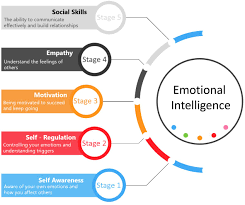
So, we continue from where we stopped. Today, we shall be looking at another very important aspect of emotional intelligence: self-regulation. We shall also endeavour to draw a conclusion to the main topic.
As the name implies, self-regulation deals with self-management. This is concerned mostly with how someone is able to control and manage his or her emotions.It is the ability to take charge of one’s impulses irrespective of whatever happens.Self-regulation also includes the deliberateness of taking responsibility for whatever action(s) emanates from you. It is you being prepared to man-up to your actions and humbly owning up to your mistakes.
When we talk about self-regulation, we cannot but mention self-control, conscientiousness, adaptability, trustworthiness, and innovation.
Self-control is the ability to recognize and manage your emotions efficiently. This means not making rash decisions or over-reacting to a situation but remaining calm,cool and collected. You are able to make balanced and informed decisions devoid of unnecessary emotional outburst.Anyone who has good self-control would generally remain calm even when provoked or stressed. Such a person is able to think clearly under pressure and still make good decisions.
Conscientiousness: this the ability to take responsibility for your own personal performance and make sure that it matches up with your abilities and values.
Daniel Goleman, author of several books on emotional intelligence, says that conscientious people:
Meet their commitments and keep their promises to others,
Take responsibility for setting and then achieving realistic objectives in their lives and works;
Are careful about their goals, organizing themselves to make sure that they achieve them.
Trustworthiness: this is the ability to maintain integrity, which means making sure that what you do is consistent with your personal values; you are a man of your words and people have come to in-turn trust you, knowing that you always keep to what you say.
Trustworthiness takes time. A person will have to be consistent in a well behaved manner over a long period of time to earn this very worthy virtue. It does not come in a short while and has to be earned.
Now we see that self-regulation is all about owning your emotions. Once you can own your emotions, you are the better for it and everyone around you feels secure whenever you are with them. The subject of emotional intelligence cannot be too over-emphasized.
In conclusion, we note that emotional intelligence can actually matter more than IQ. An individual with a highly balanced emotion tends to handle issues better and are actually better placed in sensitive positions to handle situations which are critical to human development. You don’t want to risk allowing an emotionally unstable individuals handle sensitive matters which has the tendency of negatively impacting several lives and jeopardizing several processes which might then lead to avoidable disruptions and destructions.
This topic is actually endless in explanation, as it is all practical in nature and there are so many things that relate to it. Trying to explain everything about it would amount to doing an endless writing. But suffice to say that as an individual, we are expected to be able to manage our emotions, so that the world would indeed be a safe place to co-habit together and relate with one another as the superior “animals” that science had always taught that we are.
Andrew Omeike
MEMBA 11