
The Corporate Financial Accounting (CFA) course has been very enlightening for me. It has introduced me to various accounting concepts and tools that have made it easier for me to comprehend accounting to a considerable degree. In this article, I will discuss some essential lessons I learned from the MBA lectures on Corporate Financial Accounting.
Business Goals
Business or Busyness?
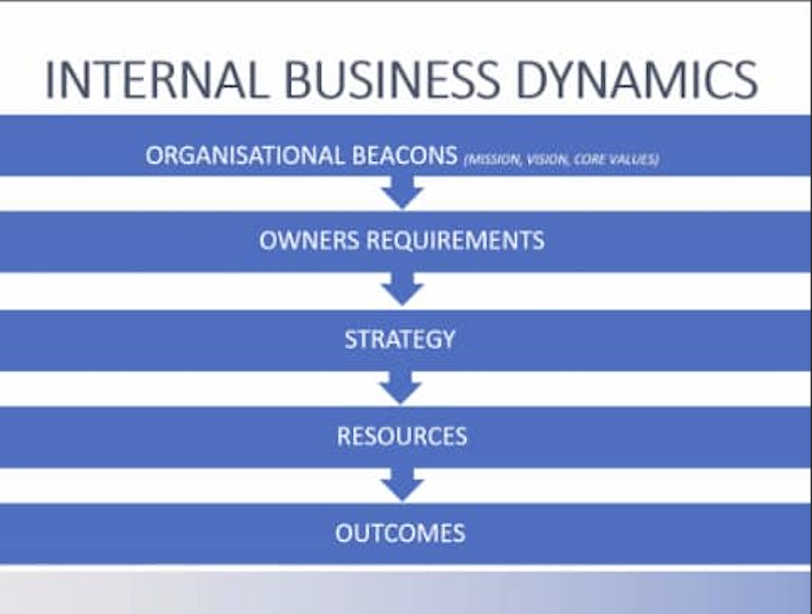
During a lecture on CFA, Dr Francis Okoye posed an important question: “Are you doing business or busy-ness?” He explained that having business goals and objectives is crucial for doing business. He then focused on the relationship between accounting and business goals. Dr Okoye began by discussing Internal Business Dynamics, emphasising how a company’s Mission, Vision and Core Values are the driving force behind the business requirements of the business owner(s). The owner’s requirements are at the core of the business goals and objectives. In other words, the reason for the existence of the business is based on the owner’s requirements.
The Ideal Business
In the next session, we discussed businesses further, talking about what drives business performance and the attributes of an ideal business. Which includes:
- Persistent Problem
- Unique Niche
- Easy to Market to Consumers
- Rich Audience
- Identifiable Channel
- Simple Tech Requirement
The first assignment we did was to write the business goals and objectives of the organisations we work for, to download the audited annual report of an organisation in our industry/sector and to write about the relevance of maintaining records in a business, and why is Corporate Financial Accounting essential for managers.
Business Decisions and Its Impact
In another session, we discussed that the role of managers is to make decisions that drive the business objectives and the owner’s requirements. One of my key takeaways was that every decision in business has financial implications. The second one was phrased simply as “do not hire who you cannot fire.”
We also talked about growing a business sustainably and how growing too fast could kill a business.
Finance: What is it? Why is it needed?
A business exists to serve the interest of the owner(s). A business also operates in an environment which comes with threats (risks) and opportunities. The business owners/managers use frameworks like PESTEL – a framework used in strategic analysis to examine the macro-environmental factors that can impact an organisation’s operations and decision-making, to identify threats and opportunities in the business operating environment. The acronym – PESTEL stands for Political, Economic, Social, Technological, Environmental, and Legal. Identifying threats and opportunities in the business environment enables the managers/owners to develop business strategies which would help them deal with these threats and opportunities.
Business strategies are nothing if they are not operationalised. Converting business strategies to business operations requires resources, such as assets, etc. To acquire these resources/assets, the business needs money. This is where finance comes in.
Finance can come in the form of Debt and Equity, such as:
- Bootstrapping
- Loans
- Incubators
- Accelerators
- Crowdfunding
- Venture Capital
Kinds of Business Decisions
Typical Business decisions are of three kinds:
- Investment Decision: concerning the resources and assets the business should invest in
- Operating Decision: concerning business operation, revenue and expenses
- Financing Decision: concerning how the business can source for finance.
Financial Statements
Financial statements are the media for communicating the financial health of the business. The statements include:
- Balance Sheet (Statement of Financial Position)
- Income Statement
- Cash Flow Statement
Elements of Financial Statement
This includes:
- Assets
- Liability
- Equity
- Revenue
- Expenses
CAMA – Companies and Allied Matters Act
CAMA is a legislative act that provides a regulatory framework for how businesses should be carried out in Nigeria.
According to CAMA, the directors of publicly listed companies are responsible for preparing financial statements for their companies. The financial statements shall include:
(a) statement of accounting policies ; (b) balance sheet ; (c) profit and loss account or income statement ; (d) notes on the accounts ; (e) statement of source and application of funds ; (f ) value added statement; and (g) five-year financial summary.
Financial Reporting Standards
These are some of the organisations which are responsible for the financial reporting standards used worldwide and in Nigeria.
- International Financial Reporting Standard (IFRS).
- International Accounting Standards Board (IASB)
- Generally Accepted Accounting Principles (GAAP). Mostly used in North America
- Financial Reporting Council of Nigeria (FRC)
These relevant laws and Standards guide the practice of accounting and how managers can implement accounting processes in their businesses. In part 2 of this series, I will be covering the accounting cycle, accounting concepts, elements of accounting, financial statements, etc.




 So Far in Corporate Financial Accounting (CFA) – Part 2