
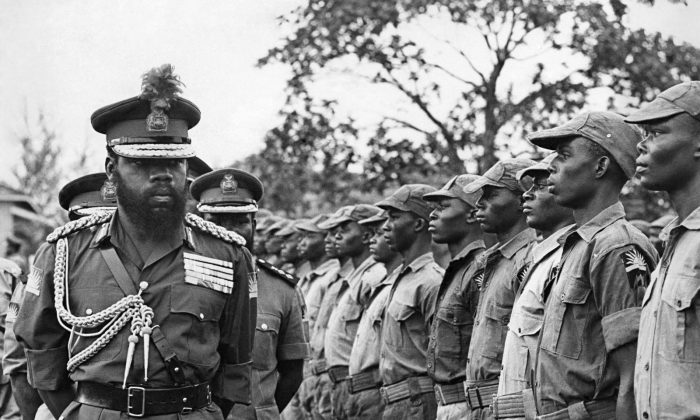
The Nigerian Civil War, a controversial period in the nation’s journey, speaks of resilience, tragedy, and the indomitable spirit of a people. As we go down memory lane, we are going to reference Chimamanda Ngozi Adichie’s “Half of a Yellow Sun” as it’s one of the modern literary works that talk about the experience in detail.
Picture this: the late 1960s, Nigeria at a crossroads. Tensions escalated between the central government and the Eastern Region, predominantly occupied by the Igbo people. The quest for Biafran independence became a reality, marking the genesis of a conflict that would reshape the nation.
Chimamanda’s novel introduces us to characters like Ugwu, a young boy from a rural village; Olanna, the beautiful mistress of a university professor; and Richard, a British writer. Through their stories, we journey into the heart of the Nigerian Civil War, witnessing the birth and dissolution of Biafra.
As the political landscape crumbled, so did the lives of those caught in the storm. The novel mirrors historical truths, portraying the euphoria that accompanied Biafra’s birth and the subsequent despair as dreams disintegrated. The emblem of “Half of a Yellow Sun” symbolizes more than a flag; it encapsulates shattered dreams and fractured unity—a poignant reflection of the broader war narrative.
In the actual war, the key players were General Yakubu Gowon, the Nigerian Head of State, and Colonel Odumegwu Ojukwu, the Biafran leader. The conflict ignited when Biafra declared independence in 1967, triggering a violent response from the Nigerian government. The war lasted until 1970, claiming the lives of millions and leaving an indelible mark on Nigeria’s collective memory.
Adichie’s storytelling paints a vivid picture of the war’s impact on individuals and communities. Ugwu’s journey from a humble village to the complexities of war reflects the broader displacement experienced by many during this period. Olanna’s life embodies the struggles of families torn apart, and Richard’s perspective as a foreigner offers insights into the geopolitical intricacies that fueled the conflict.
The humanitarian crisis depicted in the novel mirrors the stark reality of famine and disease that plagued the Biafran region. Children like Baby, a character in the novel, symbolize the innocence lost in the face of conflict. These elements parallel historical accounts, bridging the gap between fiction and the human cost of war.
Ngozi masterfully captures the resilience of individuals in the midst of chaos. As we read about characters like Odenigbo, Kainene, and Baby, we see the embodiment of the strength that defined the spirit of Biafra. Their stories become windows into the courage and tenacity that characterized those who lived through the war.
The novel’s significance also lies in its portrayal of the war’s geopolitical dimensions. Characters’ interactions with political figures mirror the broader power dynamics at play. This nuanced exploration offers readers a deeper understanding of the forces that shaped Nigeria’s destiny during that turbulent period.
In the closing chapters of both the novel and history, we witness the dissolution of Biafra. The novel’s characters grapple with the aftermath, reflecting the nation’s struggle to rebuild and reconcile. Adichie, like a skilled historian, ensures that the echoes of the war linger, prompting readers to reflect on the complexities of identity, unity, and resilience.
“Half of a Yellow Sun” is more than fiction—it is a gateway into the heart of the Nigerian Civil War. Adichie’s narrative seamlessly weaves together history and imagination, offering a poignant and accessible exploration of a defining period in Nigeria’s past. As we walk in the footsteps of Ugwu, Olanna, and Richard, we don’t just read about the war; we experience the human dimensions of conflict, loss, and the enduring spirit that rises from the ashes of history.




 The Complex World of Financial Accounting Principles
my fave character in that book is Kainene. Albeit tragic disappearance, she just encompassed the right flair and swag that was so attractive and contagious. I like how Chimamanda makes her disappear because what is a book about the civil war that does not fully and authentically replicate the actual happenings of the period. top 2 book and not number two.