

For anyone involved in accounting, from professionals to students, understanding how to analyze and record financial transactions is fundamental. Accounting is the process of recording and summarizing the economic activities of a business. To do this, accountants must identify, classify, and analyze the transactions affecting the business’s assets, liabilities, equity, income, and expenses. An effective mnemonic to assist in this process is DEAL CLIP, which stands for Debit – Expenses, Assets, and Losses; Credit – Liability, Income, and Provisions. This post will delve into how to use this acronym to analyze transactions accurately, and we will follow the journey of these transactions from the journal entry to the final accounts.
A transaction is an exchange of value between two parties that financially impacts the business. For example, buying inventory from a supplier, selling goods to a customer, paying salaries to employees, receiving interest from a bank, etc., are all transactions that affect the business’s finances.
Transaction analysis is the process of identifying the accounts involved in a transaction, determining the nature of those accounts, and finally analyzing the transaction’s financial impact on the business. Sequentially, it is a part of the overall journalizing process, which is the next step of the accounting cycle.
DEAL CLIP
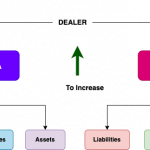
DEAL CLIP is a mnemonic that helps you to remember whether a nominal ledger account is naturally debit or credit. It stands for:
- D (Debit):
- E for Expenses: Costs that reduce profits.
- A for Assets: Resources owned by the business.
- L for Losses: Financial losses incurred by the business.
- C (Credit):
- L for Liability: Obligations or debts of the business.
- I for Income: Earnings or revenues of the business.
- P for Provisions: Future liabilities, such as pensions or warranties.
It means that to increase a debit account, you must debit it; to decrease it, you must credit it. Conversely, to raise a credit account, you must credit it; to reduce it, you must debit it.
To use DEAL CLIP to analyze a transaction, you need to follow these steps:
- Identify the accounts involved in the transaction and their types. For example, if the transaction is “Bought inventory worth NGN500,000 on credit from WYZ Ltd.”, the accounts involved are inventory (an asset account) and Accounts Payable (a liability account).
- Apply the rules of debit and credit according to the nature of the accounts. For example, since inventory is an asset account, it is a debit account. Therefore, to increase it, you have to debit it. Similarly, since Accounts Payable is a liability account, it is a credit account. Therefore, to increase it, you have to credit it.
- Record the transaction in the journal using the date format, account names, debit amount, credit amount, and narration. For example, the journal entry for the transaction above would be:
| Date | Account Names and Narration | Debit | Credit |
| Jan 1 | Inventory | 500,000 | |
| Accounts Payable | 500,000 | ||
| Being inventory bought on credit from ABC Ltd. |
- Post the transaction to the ledger accounts and balance them. For example, the ledger accounts for the transaction above would be:
| Inventory | Accounts Payable | |
| Date | Particulars | Amount |
| Jan 1 | To Accounts Payable | 500,000 |
| Balance c/d | 500,000 | |
| 500,000 | ||
| Balance b/d | 500,000 |
- Prepare the trial balance by listing all the ledger accounts and their balances in debit or credit columns.
The DEAL CLIP mnemonic simplifies transaction analysis, making determining how each transaction affects a business’s financial statements easier. It’s a foundational tool for anyone in the accounting field, ensuring accuracy and clarity in financial reporting. How has the DEAL CLIP method impacted your understanding of accounting?
#MMBA5 #LBS #PAU




 THE DOUBLE ENTRY OF ACCOUNTING: DEBITS, CREDIT AND THE BALANCE DANCE