
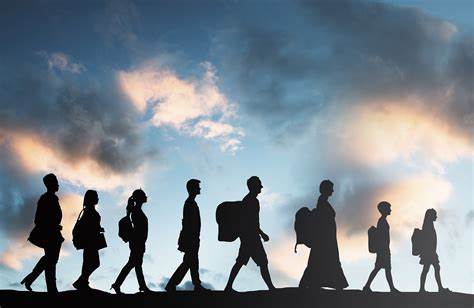
Immigration has been a topic of discussion for many years, and its impact on developing countries in the global south is a complex issue. In some reports, it is regarded as the biggest brain drain in human history while in many others, they see it as people leaving dangerous and unstable socio-economic climate for a chance at a better life. Both assertions are correct and that leaves us with the big question of how to balance the human capital needs of developing countries and also provide the required labor shortages to developed countries. According to the World Economic Forum, there are an estimated 272 million international migrants around the world, which is equivalent to 3.5% of the world’s population.
While most people leave their home countries for work, millions have been driven away due to conflict. violence, and climate change. In Africa particularly, there is a big incentive driving these journeys. This is not only limited to legal migration but also people taking horrendous journeys across the desert, in dingy boats trying to reach Europe. Despite the fact that they risk starvation, human trafficking and possible conscription into modern slavery, they persist on this sometimes-perilous adventures. This highlights a larger local problem that needs to be attended to as soon as possible.
The migration of people from the global south countries to developed countries can have a significant impact on the local economies of third-world countries. It can lead to a brain drain, where able and working people are shifted to already healthier economies, away from third-world markets where their expertise would be useful. This is largely driven by the lack of opportunities and dire economic situation back home. Analysts have argued that the only way to solve the immigration drive is not to better equip the police or law enforcement to arrest and prosecute illegal immigrants but rather to actively invest and cooperate with the countries immigrant tend to emerge from. We cannot deny the obvious disparity in the economic output of the developed, hence, they have a moral duty to not only protect their sovereignty but also to add value to societies that do not benefit from the plentiful riches of the international system.
However, migration can also support economic development if we let it. According to McKinsey, almost two-thirds of the world’s migrants reside in developed countries, where they often fill key occupational shortages. From 2000 to 2014 immigrants contributed 40 to 80 percent of labor-force growth in destination countries. Also, they are responsible for also developing the economies of their originating countries via remittances. Remittances have been ascertained to be one of the biggest benefits of the migration drive. It provides for families and also gives government much needed forex that are very important to any nation.
In conclusion, the impact of immigration on third-world countries is a complex issue that requires a nuanced approach. While it can lead to a brain drain, it can also support economic development if duly managed properly.
Thanks.




 Integrity in the Workplace: Upholding Ethical Standards for Success #MEMBA 12