
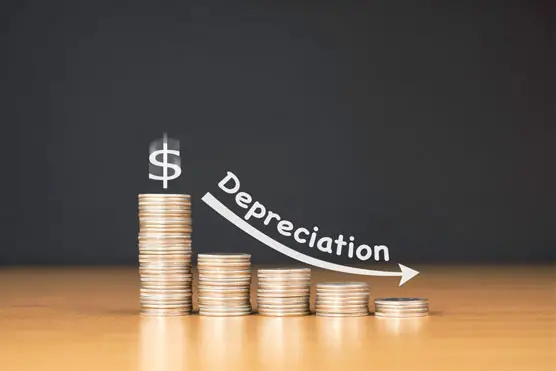
In our Corporate Financial Accounting (CFA) course, a lot of accounting terms and concepts are constantly being discussed. Depreciation is one of such. Our faculty defined Depreciation as the spread of the cost of a tangible asset over its useful life. Let me break this down further. What is an asset? What is a tangible asset?
An asset is anything a company owns and controls that would bring future economic benefits (revenue). Assets can be Income-generating assets (IGA) or non-income-generating assets (NIGA). Some types of assets we have are current and non-current assets, fixed, tangible and intangible assets. Let us look at a few of them.
Tangible assets are physical/touchable things that a company owns and controls that bring revenue, (for example equipment/machine, building, land, inventory, office furniture). Simply put, a tangible asset is an asset with physical substance. Fixed assets are tangible items a company owns and controls that have a life span of more than one year and are used for business operations. An Intangible asset is an asset that cannot seen and touched, It is a non-monetary asset that has no physical substance. Examples of intangible assets are goodwill, patents, and trademarks.
Depreciation is the process of reducing the book value of tangible fixed assets due to use, wear and tear, time, and obsolescence (discontinuance). For example, in a baking shop that has a fixed tangible asset like a baking oven, the useful life of the oven can be 10 years, if the oven costs N100,000 and this cost was spread over its useful life, that would be N10,000 per year (if spread evenly). Depreciation is referred to as a paper expense because it is a non-cash expense that involves accounting adjustments that do not involve an actual outflow of cash even though it is recorded in the income statement.
The different methods of calculating Depreciation costs are:
- Straight Line Depreciation: This is when the fixed cost is spread evenly over the time of the tangible asset’s useful life. The annual depreciation expense remains constant throughout the asset’s lifespan. The formula is Annual Depreciation = (Cost of Asset – Residual Value) / Useful Life.
- Double Declining Balance Depreciation: It is an accelerated variable cost where the expense is higher in the early years and then reduces over time, that is the asset tends to lose more value in the earlier years of its life. It is also known as the reducing balance method. The formula is Annual Depreciation = Book Value at the Beginning of the Year × Depreciation Rate.
- Units of Production Depreciation: It is also a variable cost depreciation method that is not accelerated, instead the depreciation expense mirrors the actual physical use of your asset. It is very useful when the wear and tear on an asset are directly related to its usage. The formula is Annual Depreciation = (Number of Units Produced / Total Expected Units) × (Cost of Asset – Residual Value).
Regardless of the method of depreciation used, the goal is to match the cost of the asset with the revenue it generates over its useful life. While depreciation is a non-cash expense, it plays a crucial role in accurately reflecting the financial performance and position of a business or organization over time.
#MMBA5




 The Time I was a Parrot Owner (Part 2)