
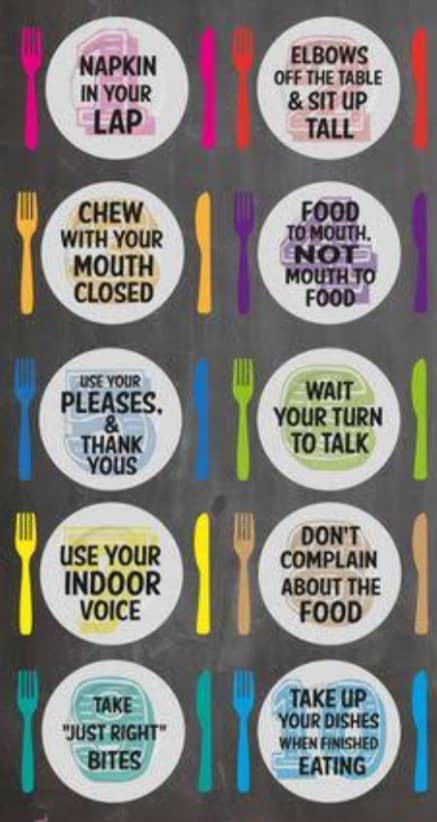
It’s like a norm in this part of the country for a child’s misbehavior to be quickly ascribed to their parents. For everything a child does that’s not in keeping with the great rule book, the society is ready to have their parents head for it. So my focus today is on etiquette, nothing serious, just a little something that I feel folks from around here should know about.
Etiquette refers to the customary code of polite behavior in society. It includes manners, social norms, and rules that guide our interactions with others. It’s all about showing respect, consideration, and kindness towards others. Etiquette covers various aspects, like table manners, greetings, communication, and dress code, to name a few. It helps create a harmonious and respectful environment in social and professional settings.
Table etiquette
Table manners are an important aspect of etiquette when dining with others. Here are some common table manners to keep in mind:
1. Napkin: Place your napkin on your lap as soon as you sit down. Use it to wipe your mouth and hands, but avoid using it to blow your nose or wipe your face.
2. Utensils: Start with the outermost utensils and work your way in as each course is served. Hold your utensils properly, with the fork in your left hand and the knife in your right (if needed). When you’re finished, place your utensils neatly on your plate.
3. Chew with Your Mouth Closed: Avoid talking with food in your mouth and chew with your mouth closed. This helps to prevent any unwanted sounds or spitting out food.
4. Elbows off the Table: Keep your elbows off the table while eating. Rest your wrists or hands on the edge of the table instead.
Remember, table manners can vary slightly depending on the culture and setting, so it’s always a good idea to be observant and follow the lead of others.
Greeting etiquette
Greetings are an important part of etiquette, as they set the tone for a conversation. Here are some common greetings to use in different situations:
1. Formal Greetings: In formal settings, it’s best to use more formal greetings such as “Good morning,” “Good afternoon,” or “Good evening.” These greetings show respect and professionalism.
2. Informal Greetings: In casual settings or when talking to friends and family, you can use more relaxed greetings like “Hey,” “Hi,” or “Hello.” These greetings create a friendly and informal atmosphere.
Communication etiquette
When it comes to communication etiquette, there are a few key things to keep in mind:
1. Active Listening: Give your full attention to the person speaking, maintain eye contact, and show genuine interest in what they’re saying.
2. Respectful Language: Use polite and respectful language when speaking to others, avoiding offensive or derogatory terms.
3. Respond Promptly: When someone reaches out to you, try to respond in a timely manner to show respect and consideration for their message.
Dressing etiquette
Dressing appropriately for different occasions is an important aspect of etiquette. Here are a few general guidelines:
1. Formal Events: For formal events like weddings or galas, opt for more formal attire such as a suit or tuxedo for men and a formal dress or gown for women.
2. Business Settings: In professional settings, it’s important to dress in business attire. Men can wear suits or dress pants with a collared shirt and tie, while women can wear pantsuits, skirts or dresses with a professional look.
3. Casual Gatherings: For casual gatherings like parties or outings with friends, you can dress more casually. Jeans, t-shirts, or sundresses are usually acceptable.
Charity, they say begins at home. Do have blissful night rest. #MMBA5




 On Analyzing Problems