
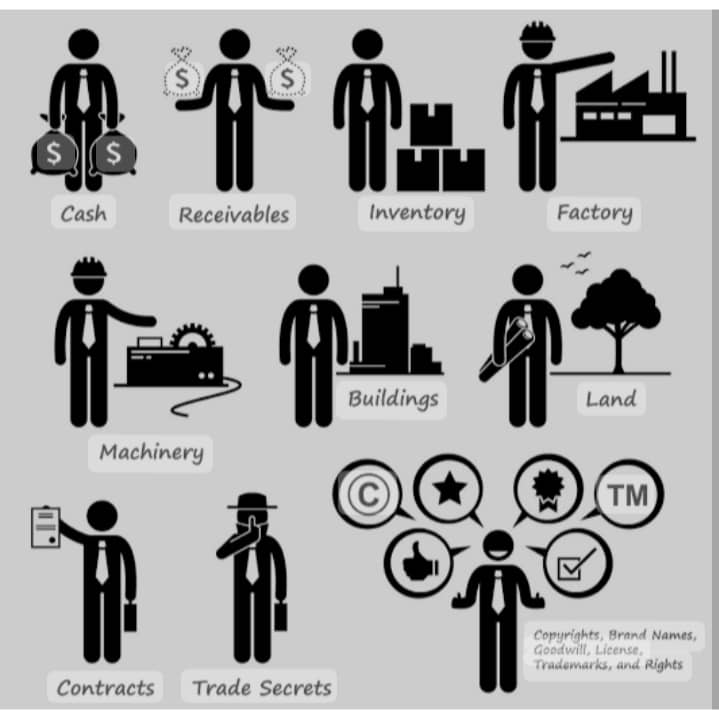
Last time we looked into financial assets as an example of business assets to a great extent, now we will briefly explain a number of other business assets. Let us quickly get into it, some other examples of business assets include:
1. Physical assets: such as buildings, equipment, inventory, and vehicles.
2. Intellectual property: like patents, trademarks, copyrights, and trade secrets.
3. Financial assets: such as cash, investments, and accounts receivable.
4. Human capital: including the skills, knowledge, and experience of employees.
5. Brand reputation: the value associated with a company’s name, image, and customer loyalty.
6. Customer database: a collection of customer information and relationships.
7. Technology and software: tools and systems that streamline business operations.
8. Supplier and vendor relationships: partnerships that provide essential goods or services.
9. Goodwill: the intangible value associated with a company’s reputation and customer base.
10. Business networks and partnerships: collaborations that offer strategic advantages. We will further explain a few of them starting from the top, please stay with me.
Physical assets
Physical assets in business refer to tangible items that a company owns and uses to conduct its operations. These assets have a physical presence and can be seen, touched, or measured. Examples of physical assets include buildings, land, machinery, equipment, vehicles, inventory, and furniture. These assets are essential for the day-to-day functioning of a business and can contribute to its overall value and productivity.
Intellectual property
Intellectual property refers to creations of the mind that have commercial value and are protected by law. It includes things like inventions, artistic works, designs, symbols, names, and images. As a business asset, intellectual property can be extremely valuable and provide a competitive advantage. Examples of intellectual property assets include patents, trademarks, copyrights, and trade secrets. Patents protect inventions, trademarks safeguard brand names and logos, copyrights protect creative works, and trade secrets safeguard valuable confidential information. These assets can be licensed, sold, or used to generate revenue for a business.
Human capital
Human capital refers to the skills, knowledge, and abilities that employees bring to a business. It’s like having a team of talented individuals who contribute to the success of the company. It’s an important asset because it can drive innovation, productivity, and overall growth. So, having a strong human capital can give a business a competitive edge.
Brand reputation
Brand reputation is definitely a valuable asset for businesses. It’s like the image and perception that people have of a company. A good reputation can build trust with customers, attract new business, and even help during challenging times. It’s like having a strong foundation that supports the growth and success of a business. So, businesses invest a lot in maintaining and enhancing their brand reputation. It’s like having a positive word-of-mouth that spreads and brings in more opportunities.
Goodwill
Goodwill, as a business asset, refers to the intangible value associated with a company’s reputation, customer relationships, and brand image. It represents the positive feelings and trust that customers have towards a business, which can result in increased customer loyalty, repeat business, and a competitive advantage. Goodwill is often considered when valuing a company during mergers and acquisitions. Thank you for sticking with me to the end, do have a great weekend! #MMBA5




 Data Science vs Data Analytics