
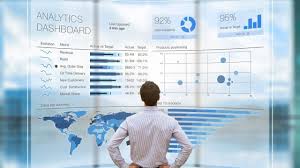
Data analytics helps us make sense of the past and to predict trends and behaviors for the future; rather than basing your decisions and strategies on guesswork, you’re making informed choices based on what the data is telling you. A data analyst will extract raw data, organize it, and then analyze it, transforming it from incomprehensible numbers into coherent, intelligible information. Having interpreted the data, the data analyst will then pass on their findings in the form of suggestions or recommendations.
A data analyst will seek to answer specific questions or address particular challenges that have already been identified and are known to the business. To do this, they examine large datasets with the goal of identifying trends and patterns. They then “visualize” their findings in the form of charts, graphs, and dashboards. These visualizations are shared with management and used to make informed, data-driven strategic decisions.
Why Data Analytics?
- For Descriptive Purposes: Seeking to describe and answering questions like; what happened ?
- For Diagnostic reasons: concerned with the diagnosis and answering questions like; why did it happen?
- For Predictive objectives: why is it likely to happen?).
- For Prescriptive purposes: what’s the best course of action?
Descriptive analytics is a simple, surface-level type of analysis that looks at what has happened in the past. The data analyst first gathers the data and presents it in a summarized format (that’s the aggregation part) and then analyzes the data to discover patterns. The data is then presented in a way that can be easily understood by a wide audience (not just data experts).
Diagnostic analytics: explores the “why”. When running diagnostic analytics, data analysts will first seek to identify inconsistency within the data—that is, anything that cannot be explained by the data in front of them. e.g: If the data shows that there was a sudden drop in revenue, the data analyst will need to investigate the cause.
Predictive analytics: Just as the name suggests, predictive analytics tries to predict what is likely to happen in the future. This is where data analysts start to come up with actionable, data-driven insights that the company can use to inform their next steps.
Prescriptive analytics: Building on predictive analytics, prescriptive analytics advises on the actions and decisions that should be taken. In other words, prescriptive analytics shows you how you can take advantage of the outcomes that have been predicted.
Most companies are collecting loads of data all the time—but, in its raw form, this data doesn’t really mean anything. This is where data analytics comes in. Data analytics is the process of analyzing raw data in order to draw out meaningful, actionable insights, which are then used to inform and drive smart business decisions. Data analysts tackle and solve discrete questions about data, often on request, revealing insights that can be acted upon by other stakeholders, while data scientists build systems to automate and optimize the overall functioning of the business.
One can think of data analytics as a tool used to solve specific problems and challenges within an organization. It’s all about finding patterns in a data set which can tell you something useful and relevant about a particular area of the business—how certain customer groups behave, for example, or how employees engage with a particular tool.
There exists a lot of tools that Data Analyst use for analysis and visualization for example Microsoft Excel, Python, R, Microsoft Power BI, Tableau to mention a few.
As a Data analyst, If your torture the data for long enough, it will confess to anything.
Don’t miss the next reading.
#MMBA5




 The Psychology of Consumer Behavior in the Digital Age