
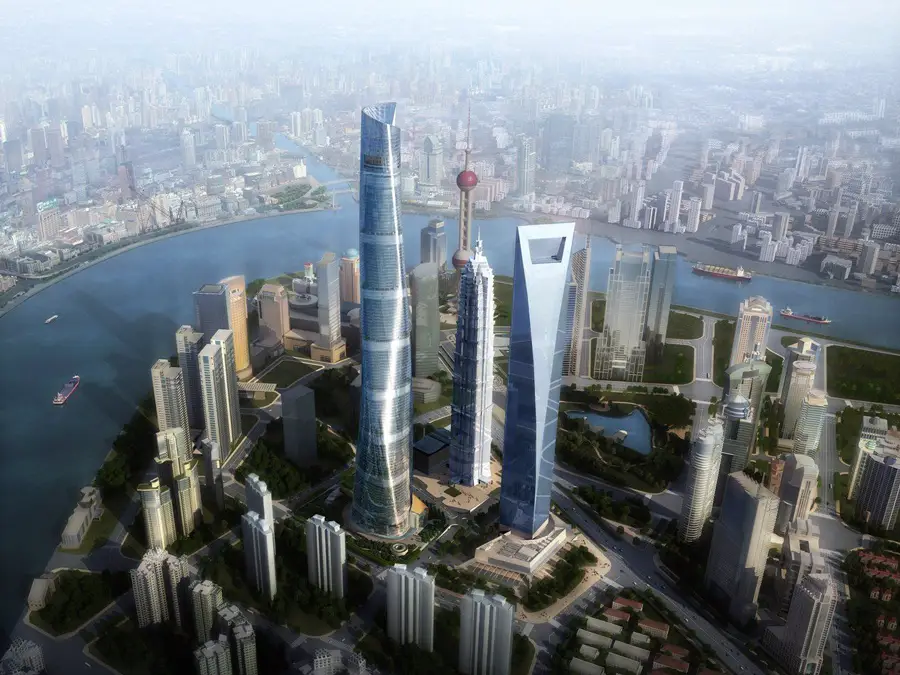
Technology and medical advances enable people to live longer, healthier lives. However, this brings up problems and concerns with overpopulation and overcrowding. As the population increases, so does the need for living space. Increasing the number of homes and neighborhoods often results in the destruction of forests and other habitats. This limits our natural resources, endangers wildlife, and threatens to disrupt our ecosystem. This problem cannot be overlooked.
A vertical city is an entire human habitat contained in a massive skyscraper. Vertical cities hold the key to solving overpopulation and overcrowding.
The human population continues to rise at an alarming rate. If action is not taken, a critical mass will eventually be reached. In other words, the environment will no longer be able to support us.
In 2021, I began exploring the concept of vertical cities as a solution to the growing problem in Abuja and other major cities and metropolises in Nigeria. I formed Vertical Cities Development Company Limited, focusing on concern for people, the environment, and sustainability.
I am currently campaigning to raise awareness about the potential of vertical cities, as they can preserve natural resources and enhance available living and working space.
As the population of Abuja increases, the master plan and redesign of farmlands are affected, making it difficult for farmers to grow enough food to feed everyone. Vertical cities offer stunning possibilities for sustainability, and with proper planning, research, and funding, these towers can become a reality.
I believe vertical cities are impossible. With the proper planning, research, and funding, these towers can easily become a reality. The key to making this concept successful is spreading awareness. As the dangers of overpopulation become apparent, so does the demand for a solution. Unless someone discovers a better answer, vertical cities currently hold the key to sustainability.
Currently, planning and designs of vertical cities are ongoing on our lands in the Central Business District and some sector centers in the Federal Capital City (FCT), working to replicate Dubai’s approach of separating residential housing, income-property buildings (commercials), and retirement homes. Separating work areas from residential areas is crucial.
Looking to the future, whether or not vertical cities will be the solution in Nigeria within the next decade is certain. It’s important to remember that projects of this magnitude require a large amount of planning before they can be implemented. It’s vital to consider the safety and health aspects of vertical living. Questions of power and maintenance must also be addressed. While vertical cities offer great possibilities for the future, it’s vital to ensure they are built correctly.
Remembering the admission process into the LBS some months ago, I was asked about my expectations if admitted. Without thinking twice, I want to learn business skills, knowledge, and networks because I have projects that I am planning to embark on that will require business skills and knowledge. And the projects are building vertical cities across Nigeria.
It was tempting to rush in and start building these towers, but I needed business sense. As much as I need an answer to overpopulation and environmental destruction, I also need to take the proper steps to ensure it’s done properly. Any oversight or miscalculation could be dangerous and destructive. When the future and lives of so many people are involved, there is little margin for error. However, with the proper foresight, vertical towers could be the answer for which humanity has been looking.
My final thoughts are that, with the problems of overpopulation and environmental destruction looming over us, we are desperate for a solution. Waiting too long to address this issue will undoubtedly be disastrous and destructive. However, moving too fast without the proper foresight will likely prove equally damaging. The key to making the dream of the vertical city a reality is ensuring it’s done right. It’s vital to learn as much as we can to avoid possible problems. But we can only wait so long. Time is not on our side, but even a few vertical cities could have a profoundly positive impact on our environment.
Makama Abednego
CEO, Vertical Cities Development Company Limited
#MEMBA12



