
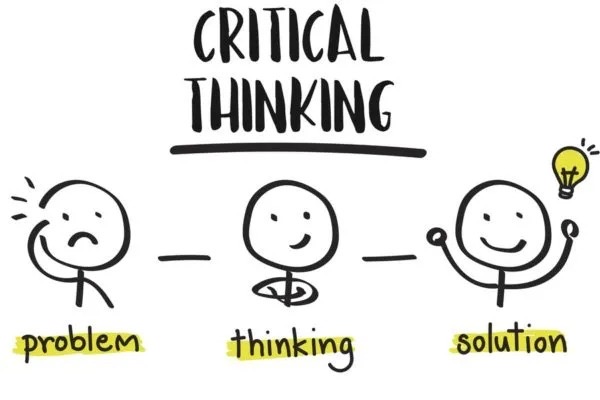
“Critical thinking is the most important factor with chess. As it is in life, you need to think before you make decisions”
Hikaru Nakamura
Imagine a situation where your business is running at a loss due to increased operating costs and the sustainability of the business is in doubt. Perhaps the issue is that the cost of operation has skyrocketed due to inflation which has led to a decline in profit. This trend is expected to continue for the next few years. Your business is now at a crossroads – find a strategic solution to return the business on the path of profitability or endure the decline and cease to be a running concern.
This is where a Manager must put on his thinking cap and allow himself to be led by evidence, not emotions. You are required to apply both quantitative and qualitative reasoning to ensure that the problems are identified, analysed and resolved bearing in mind the immediate and long term priorities of your business. This orderly reasoning pattern is often regarded as critical thinking. Critical thinking is an essential aspect of the business decision-making process. It is a cognitive skill and a mental process that involves analyzing, evaluating, and synthesizing information, ideas, or arguments to make reasoned judgments or decisions. It is a way of thinking that goes beyond accepting information at face value and instead involves a deeper level of understanding and reasoning. Critical thinking is essential in all works of life including but not limited to problem-solving, decision-making, and evaluating the quality of information.
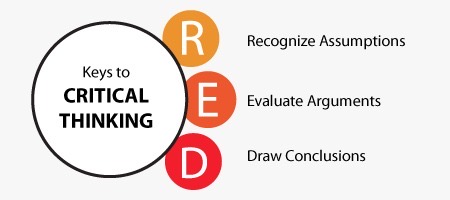
Some key aspects of critical thinking:
Analysis: This involves the breaking down of complex problems into their constituent parts to understand the relationships and connections between different elements. Analysis plays a significant role in laying bare all aspects that may constitute the problem.
Evaluation: This entails assessing the validity, reliability, and relevance of information or arguments. This includes examining evidence, sources, and assumptions. A Business Manager utilizes this process to validate the information before making informed business decisions.
Inference: Critical thinking involves drawing logical clues based on the information and evidence available in any business situation. For instance, figures can mathematically infer the profitability or lack thereof of any business enterprise. Through inference, an investor may make informed decisions on investment plans.
Problem-Solving: Critical thinking is a fundamental component of effective problem-solving. It enables individuals to identify, define, and solve problems systematically. Identifying the supposed problem is an integral process to solving any business dilemma.
Open-Mindedness: In making a business decision, a manager is required by the rules of critical thinking to maintain a level of open-mindedness which enables him to consider different perspectives and be directed by relevant. This in turn makes it easierfor him to revise his assumptions or judgments in light of new evidence or insights.
Creativity: Creative thinking is often a part of critical thinking. Business Managers are required to come up with innovative solutions to problems or novel ways of looking at issues. Through this form of thinking, a Business Manager identifies opportunities for growth within an existing problem.
Communication: Effective communication is closely linked to critical thinking. Critical thinkers are required to clearly and persuasively convey their findings, ideas and recommendations.
Skepticism: A degree of healthy skepticism is a part of critical thinking. It involves questioning information and not accepting it blindly.
Rationality: Critical thinking relies on logical reasoning and evidence-based judgments.
Ethical Considerations: Critical thinking also involves ethical considerations, ensuring that decisions and judgments align with moral and ethical standards.
Critical thinking is a skill that can be developed and honed over time through practice and education. It is highly valued in business settings as it promotes deeper understanding of the terrain and the ability to analyze and synthesize knowledge essential for making informed business decisions, solving complex problems, and fostering innovation.
By Barrister, #MEMBA 12



