
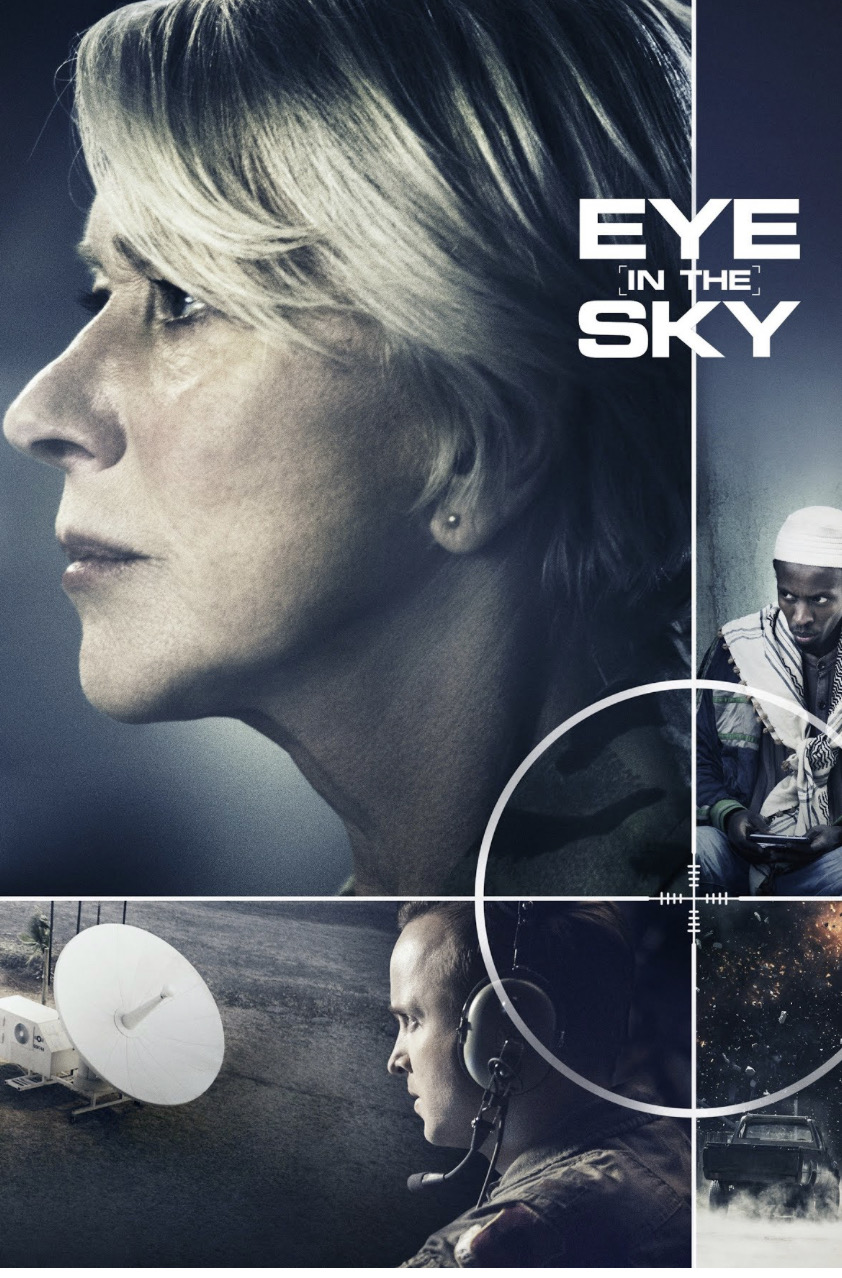
“Eye in the Sky” provides a thought-provoking examination of modern warfare techniques that involve remote-controlled drones and surveillance technologies, highlighting the tensions between national security, military objectives, and the protection of innocent lives.
The film explores the complex decision-making process involving various key characters, including government officials, military personnel, and intelligence officers, as they grapple with the legal, ethical, and political implications of launching the strike. The collateral damage and potential civilian casualties that may occur become a central point of contention, raising questions about the cost of war and the value of human life.
The story follows Colonel Katherine Powell (played by Helen Mirren), a British military intelligence officer, who leads a mission to capture a group of high-profile terrorists(Abdullah-al-hi and his wife Susan) in Nairobi, Kenya. However, the operation takes an unexpected turn as the drone provides real-time surveillance of the area. The military officers and government officials became aware that the target is preparing suicide bombers with their recruits for an imminent attack. Faced with the risk of a significant terrorist attack, the military leaders and politicians must weigh the potential benefits of taking out the high-value target against the risks of civilian casualties which is the young girl Alia selling bread, who happens to enter the blast radius of the missile. The ethical implications of the strike became more complex.
As the situation escalates, Powell requests authorization for a drone strike to eliminate the threat.
Ultimately, the decision is made to launch the missile and take out the target, as the risks of a significant terrorist attack are deemed too high. The mission changes from a capture operation to a kill operation, as the potential threat to civilian lives and national security outweighs the possibility of capturing the target alive. The film highlights the difficult ethical choices that military leaders and government officials must make in the face of complex and rapidly changing situations in modern warfare.
The team composition in the cabinet office briefing room highlights the importance of critical thinking, collaboration, communication, and coordination among different stakeholders in making high-stakes decisions in the context of national security.
We could also see cognitive biases in the movie from Angela, who at some point became very emotional and disputes the change of mission giving reasons like killing an American citizen without permission in a friendly country was not to be done, without weighing the potential risk of letting the terrorist go into town to cause more harm.
Overall, the movie underscores the importance of clear leadership, effective communication, trust, and respect among team members, flexibility and adaptability, and ethical decision-making in high-pressure environments. Teams that exhibit these traits are more likely to succeed in making difficult decisions under pressure and achieving their objectives.
In real-life situations, while making business decisions, we find ourselves making tough decisions, the ability to communicate, carry all our teammates along, and remove biases will enable us to make a better-informed decision. We must RE ACCESS AND WIEGH OUR RISK EVEN WHEN WE HAD AN INITIAL PLAN.



