
In todays blog post, we are going to address some challenges that we encounter everyday as basic investors, what indices do we look at before investing, what matters tio us? The numbers? The hype? The potentials? Well, i am sure you will be relieved to learn about financial ratios. Financial ratios are critical tools that investors use to evaluate a company’s financial health, performance, and potential risks. These ratios provide quantitative data that helps investors make informed decisions about whether to invest in a company or not. In this blog post, we will explore the importance of financial ratios in investing and how investors can use them to enhance their investment returns.
Performance Evaluation
One of the primary reasons financial ratios are important in investing is that they allow investors to evaluate a company’s past and current performance. Financial ratios can help investors assess a company’s growth potential, profitability, and consistency of generating profits. By comparing ratios over time or against industry benchmarks, investors can identify trends and determine whether a company’s financial performance is improving or declining.
Risk Assessment
Financial ratios also help investors assess the risk associated with an investment. Ratios such as debt-to-equity ratio and interest coverage ratio provide insights into a company’s ability to meet its financial obligations. Higher debt levels or low interest coverage may indicate increased financial risk, while strong ratios imply better financial stability. By understanding a company’s financial risk profile, investors can make informed decisions about whether to invest in the company or not.
Profitability Analysis
Financial ratios provide investors with a better understanding of a company’s profitability. Ratios such as return on equity (ROE), return on assets (ROA), and gross profit margin help assess a company’s profitability. These ratios provide information on how effectively a company generates profits from its resources, assets, and sales. Higher profitability ratios are generally preferred by investors as they indicate better earnings potential.
Efficiency and Productivity
Ratios such as inventory turnover, receivables turnover, and asset turnover measure a company’s efficiency and productivity. They reveal how effectively a company manages its inventory, collects receivables, and utilizes its assets to generate sales. Higher turnover ratios often indicate better efficiency and can be indicative of a well-managed company. By understanding a company’s efficiency and productivity, investors can make informed decisions about whether to invest in the company or not.
Valuation Analysis
Financial ratios are also used in valuation analysis. Ratios such as price-to-earnings (P/E) ratio and price-to-sales (P/S) ratio help investors assess whether a stock is undervalued or overvalued relative to its earnings or sales. These ratios provide a benchmark for comparing a company’s valuation with its peers or industry averages. By understanding a company’s valuation, investors can make informed decisions about whether to invest in the company or not.
Investment Decision-Making
Financial ratios provide investors with quantitative information that helps them make informed investment decisions. By analyzing a company’s financial ratios, investors can identify strengths and weaknesses, compare different investment options, and assess the overall financial health and stability of a company. This information is crucial for selecting investments that align with an investor’s risk appetite, return expectations, and investment objectives.
Monitoring and Early Warning Signs
Regularly monitoring financial ratios allows investors to track a company’s performance and detect potential issues at an early stage. A sudden deterioration in key ratios may indicate financial distress, operational inefficiencies, or management problems. By staying vigilant and tracking ratios, investors can take timely actions such as selling a stock, reducing exposure, or conducting further due diligence.
From the points above,i am sure we can agree financial ratios are essential tools that investors use to evaluate a company’s financial health, performance, and potential risks. By analyzing financial ratios, investors can make informed investment decisions, manage risks effectively, and potentially enhance their investment returns. It’s important to note that financial ratios should be considered in conjunction with qualitative factors and other aspects of the investment analysis to gain a comprehensive understanding of a company’s prospects. By doing so, investors can make informed investment decisions that align with their investment objectives and risk tolerance.
Below, i have added a simple guide towards understanding financial ratios, please do well to pay attention to it.
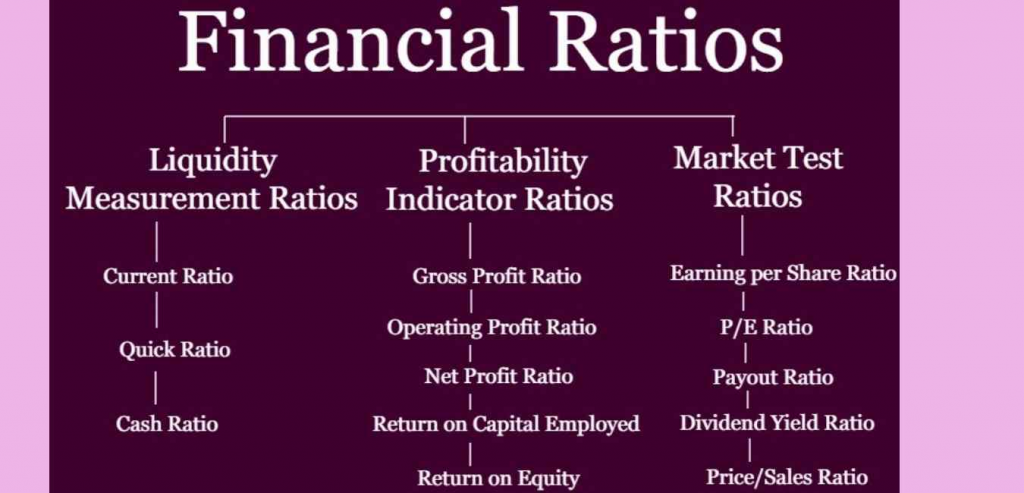
Fig 1.1 Key financial ratios



