
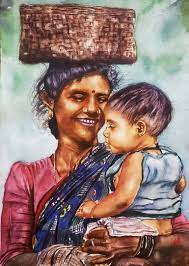
My reading habit, culture, interest was initiated after I read my first novel, “The Virtuous Woman” by Zaynab Alkali. In my 13 years on earth, nothing had ever held my attention so raptly than this novel. I was in the story closely following behind Hauwa’s steps.
The novel takes us through the ups and downs of a young woman’s life, Hauwa, who navigates marriage, motherhood, and entrepreneurship in a society that is rapidly changing.
The setting is in a traditional Muslim community in Northern Nigeria, where arranged marriages are still a thing and gender roles rigidly defined. It is no surprise that Hauwa is married off to a much older man named in an arranged marriage. However, she struggles to settle into her new role as a wife and mother.
In the face of these challenges, she is determined to live a good and virtuous life with the aim of becoming a successful businesswoman. She opens a clothing store and becomes a role model for other women in her community who aspire to be independent and successful.
Her success is not without its trials as some men in her community view this independence and ambition of hers as a threat to the rigid traditional gender roles and patriarchal norms. This includes her own husband, who becomes increasingly controlling and abusive as Hauwa becomes more successful.
The novel highlights the complex and often contradictory nature of traditional gender roles in the Nigerian society. On the one hand, women are expected to be submissive and obedient to their husbands, while on the other hand, they are praised for their piety and devotion to family and community.
Hauwa’s struggle to balance these expectations is at the heart of the novel. She is torn between her desire to be a good wife and mother and her passion for entrepreneurship and independence. Ultimately, Hauwa chooses to pursue her dreams and leave her husband, a decision that is met with both admiration and condemnation from those around her.
One of the strengths of the novel is its nuanced portrayal of the characters and their motivations. Hauwa is not simply a victim of her circumstances; she is a complex and multi-dimensional character who is both admirable and flawed. Her husband, Maina, is similarly complex. Although he is abusive and controlling, he is also a product of a society that values male dominance and authority.
The novel also explores the tensions between tradition and modernity in Nigerian society. As Nigeria becomes more urbanized and Westernized, traditional values and customs are being challenged and sometimes replaced. Hauwa’s struggle to reconcile these competing forces is a microcosm of the larger tensions within Nigerian society.
Throughout the novel, Alkali uses vivid and lyrical prose to create a richly textured portrait of Northern Nigerian life. She pays close attention to the sights, sounds, and smells of the landscape, as well as the intricacies of daily life in a traditional community. This attention to detail brings the novel’s setting to life and makes it feel both authentic and immersive.
I felt her resilience, her pain, her determination. I may not have fully comprehended the dynamics at play, but it definitely moved me into a space where reading gave me different perspectives to situations I may never have a first or even second had account of.
This reading habit; consuming and devouring almost all materials I come across helps shape how I think, how I perceive issues. The critical thinking process can only be improved by continuous consuming of information available in order to understand and if necessary, shift perspective.




 Project Work? What is the benefit?